Burgess Peaks
- Location
- Raglan, New Zealand
- Industry
- Beef & lamb boxes
- Platform
- Shopify
- Scope
- Store built end to end, Facebook and Instagram, product pages, performance
A family-run farm in Raglan selling grass-raised beef and lamb boxes direct. We built the whole store, connected it to Facebook and Instagram, and designed product pages that make a meat box an easy, confident buy.
Visit the store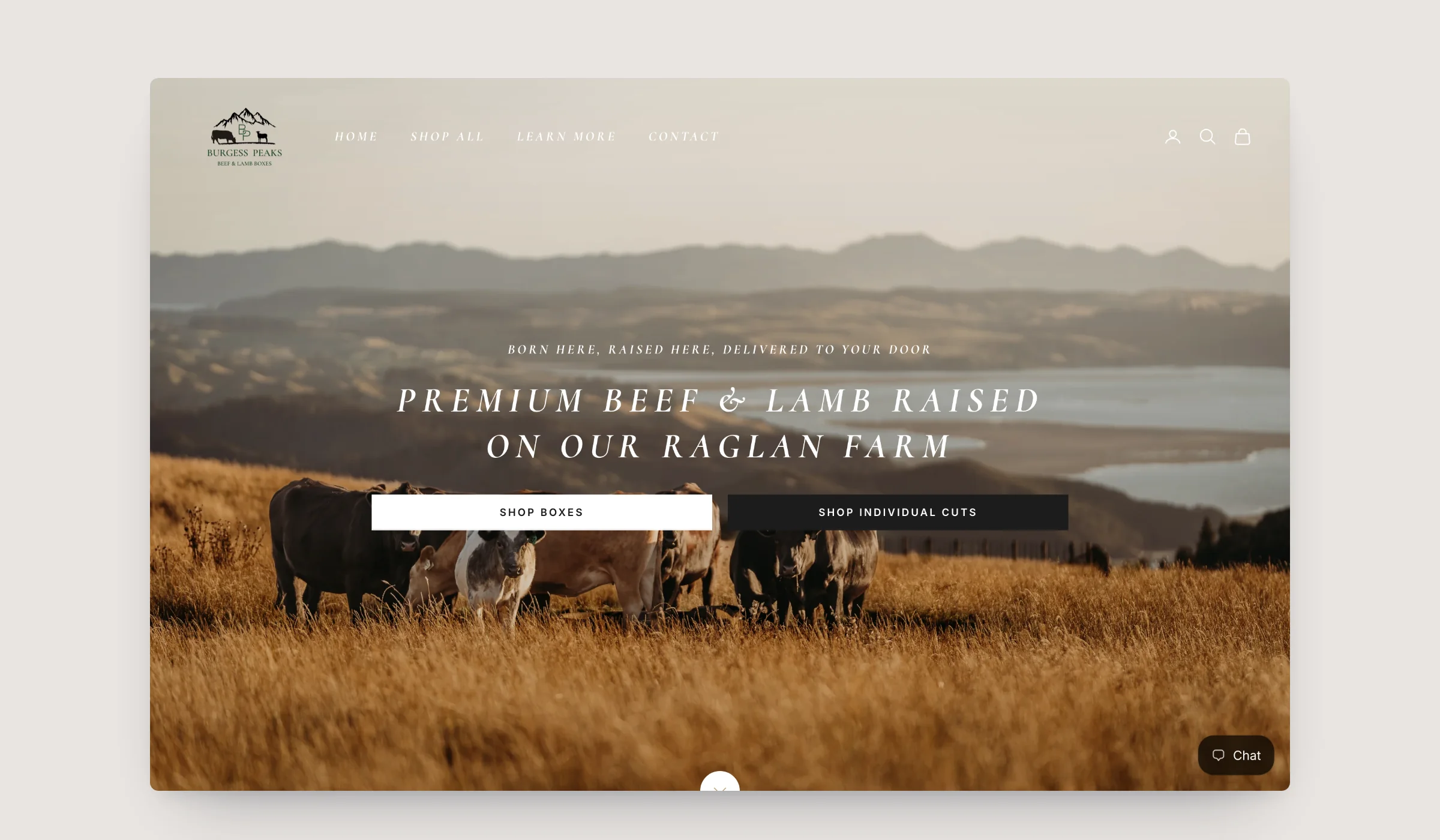
Capabilities proven here
- 01Store built end to end
- 02Pay in four and subscriptions
- 03Facebook and Instagram selling
- 04Performance fix
Services behind this work Shopify development/Shopify theme development
The brief
Burgess Peaks raises beef and lamb on its own farm in Raglan and delivers it to doors across New Zealand. Buying a box of meat online is a trust decision: what is in it, where it comes from, how it arrives.
We built the store end to end, connected the catalogue to Facebook and Instagram, and put the most effort where it pays: the product page.
Then, in September 2026, customers started reporting that the store’s Facebook links were broken. The link was fine; the page was going blank inside the Facebook app. That turned a design job into a performance job as well, and it is why this page has a measured result.
Services & technology
- Store design and build
- Product page design
- Facebook and Instagram connection
- Performance
01Homepage
Store built end to endShopify development
Born here, raised here, delivered to your door.
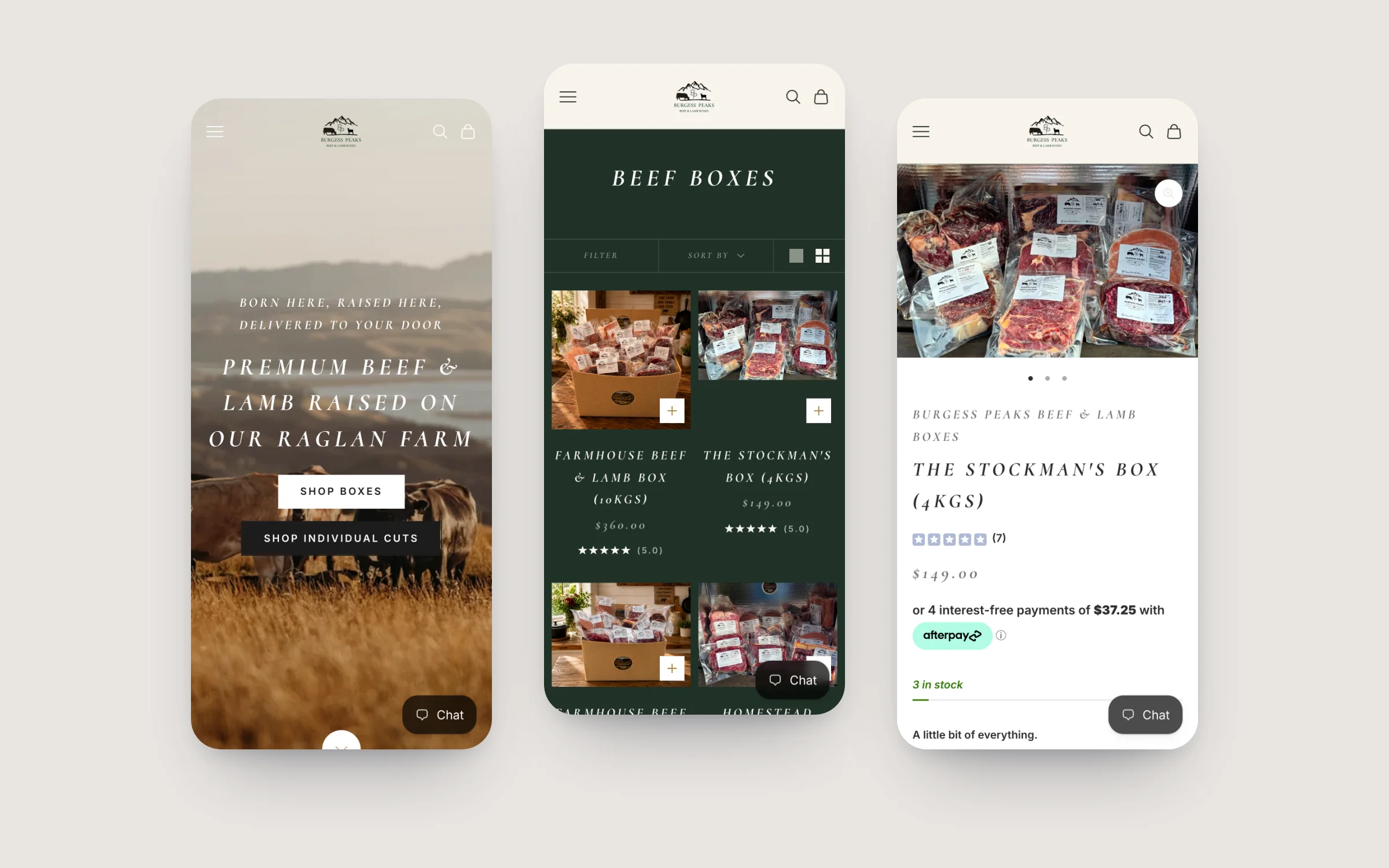
The homepage opens on the farm itself, with two clear paths: shop boxes or shop individual cuts. Straight after, a row of reasons does the reassuring: Afterpay, raised on the family farm, nationwide delivery, no nasties, grass raised.
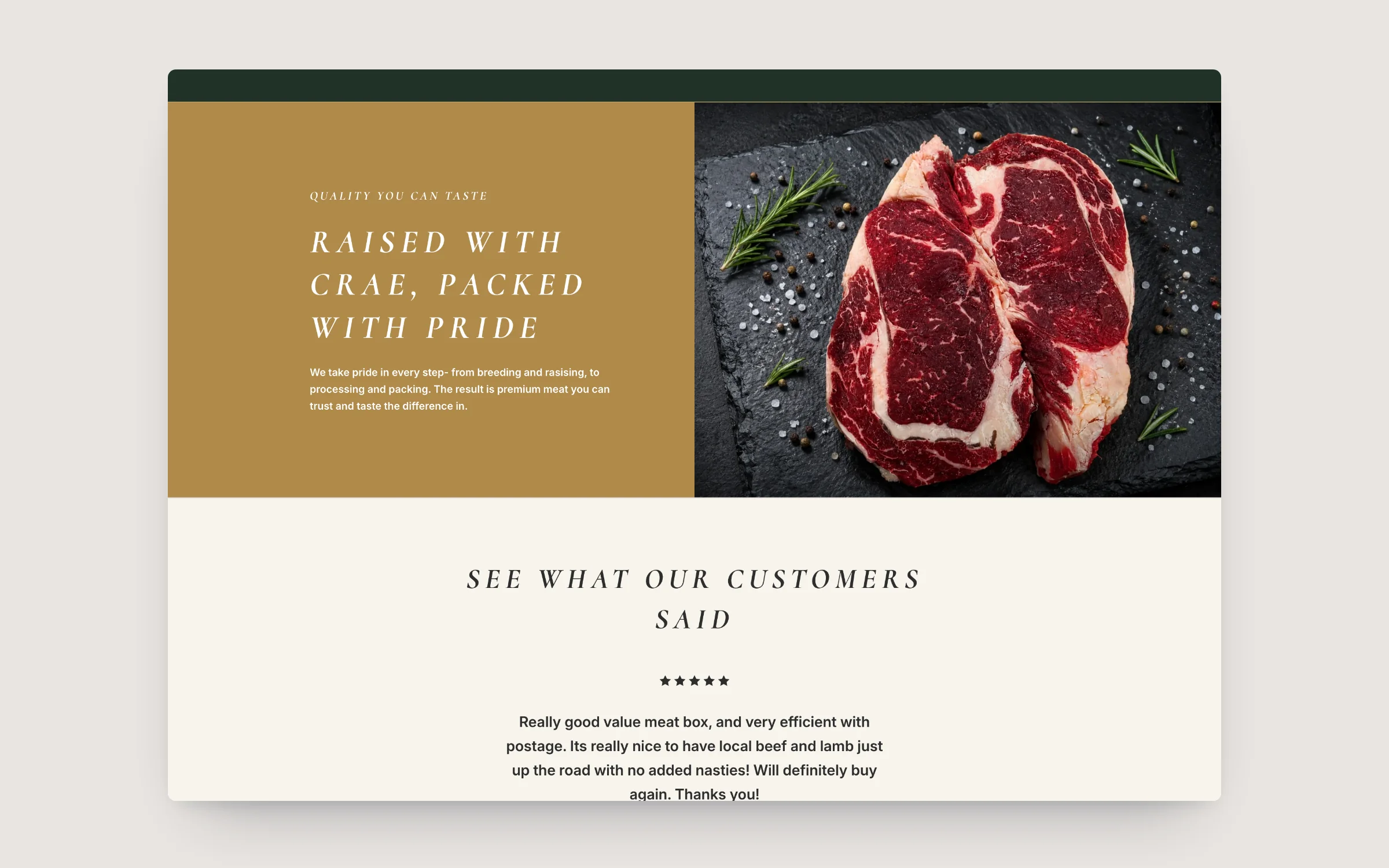
Premium individual cuts, customer reviews and the story of the farm follow, so a first-time buyer has every answer before they reach a product.

02Collections & filtering
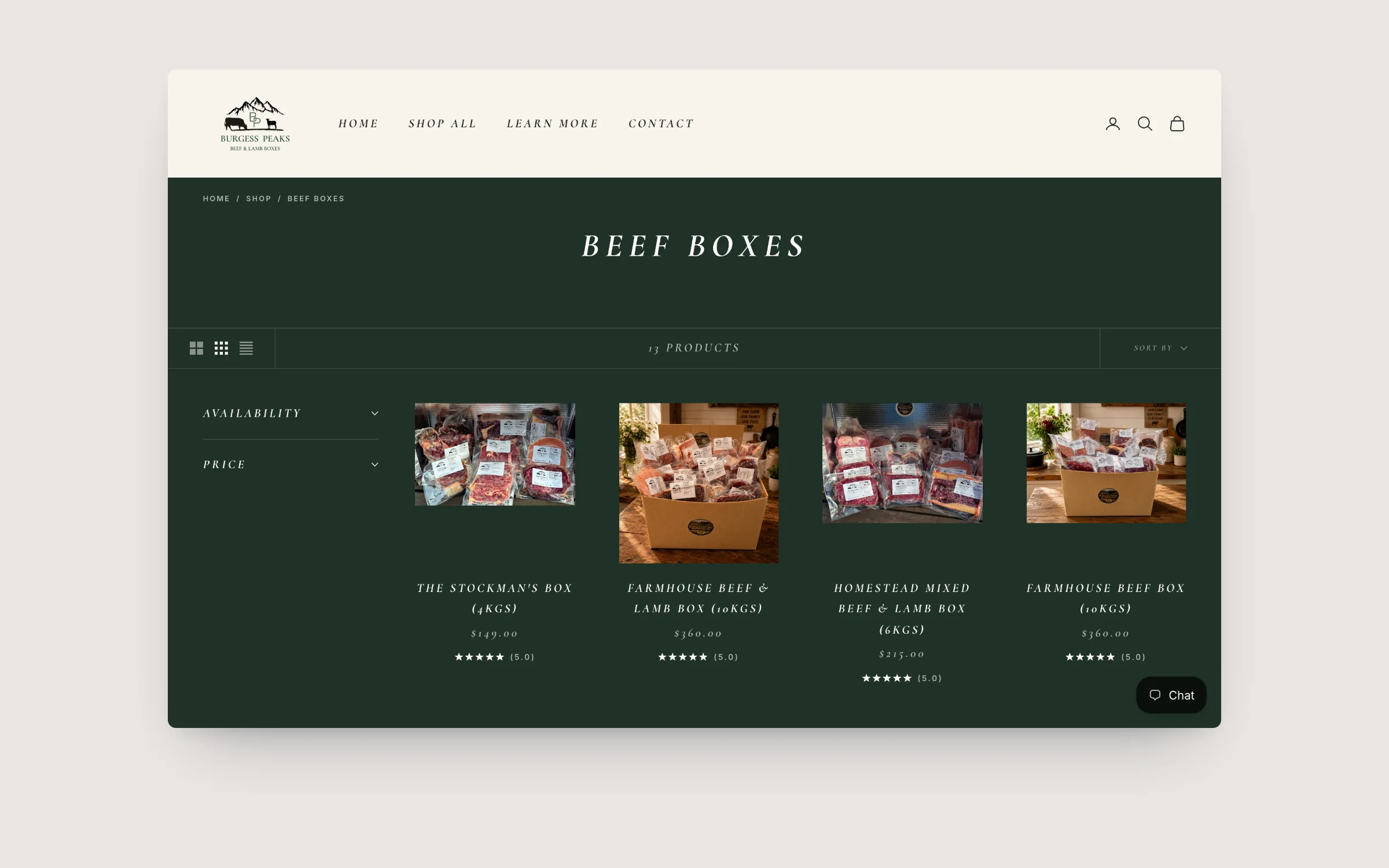
Boxes first, cuts second, both easy to compare.
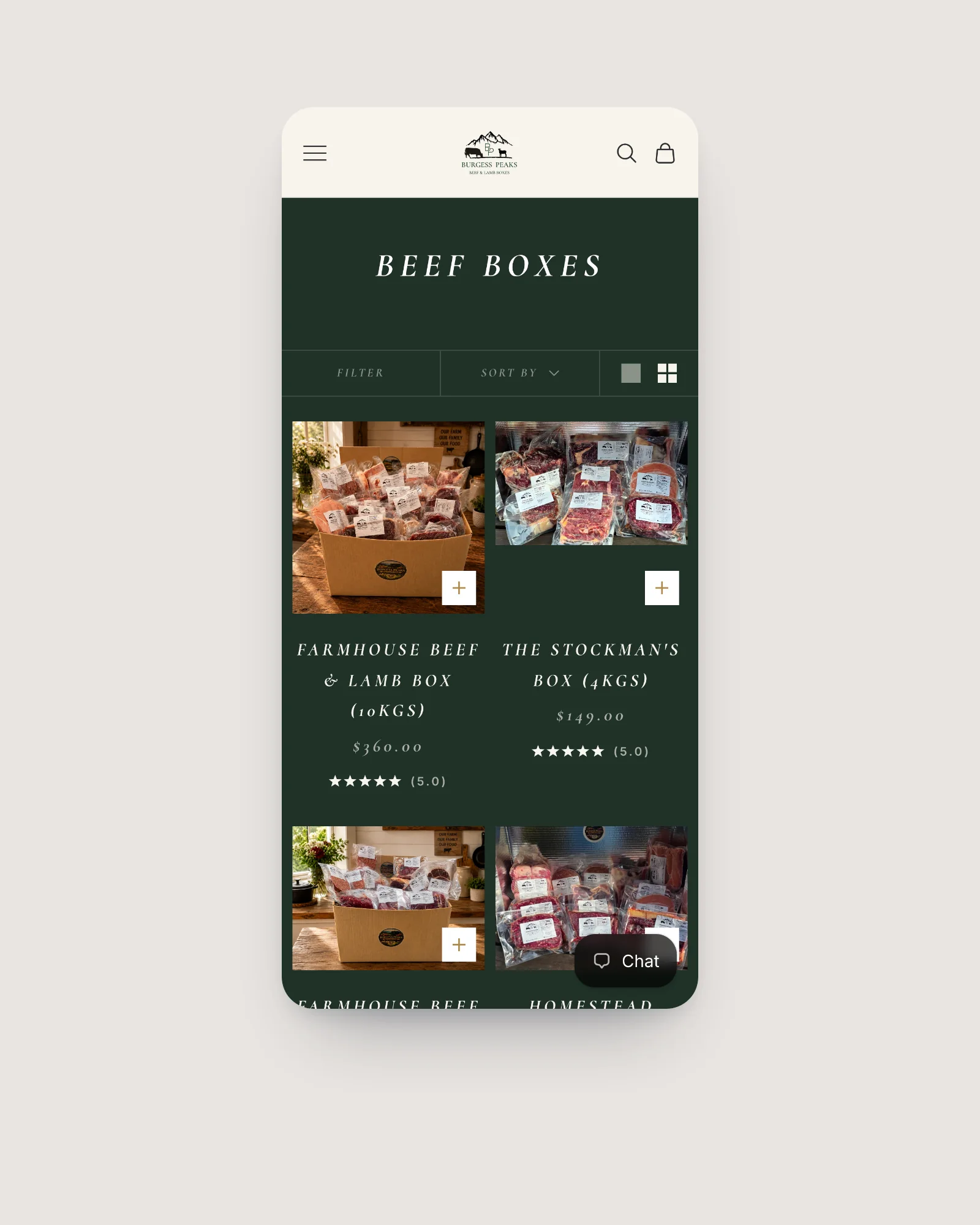
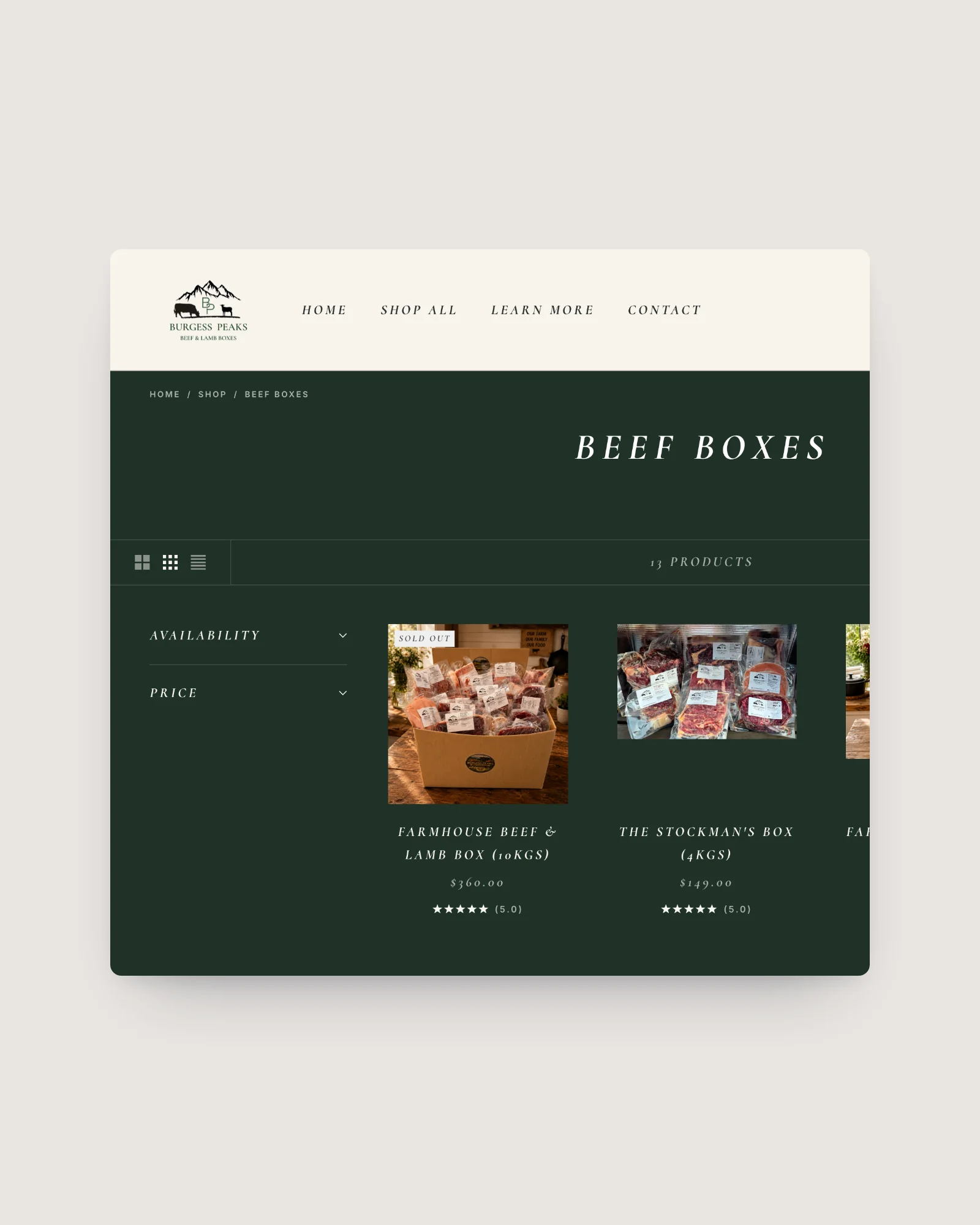
Collections like Beef Boxes show a product count, availability and price filters, and cards that make boxes easy to compare side by side on photography and price.
03Product page
Pay in four and subscriptionsShopify development
A meat box that sells itself.
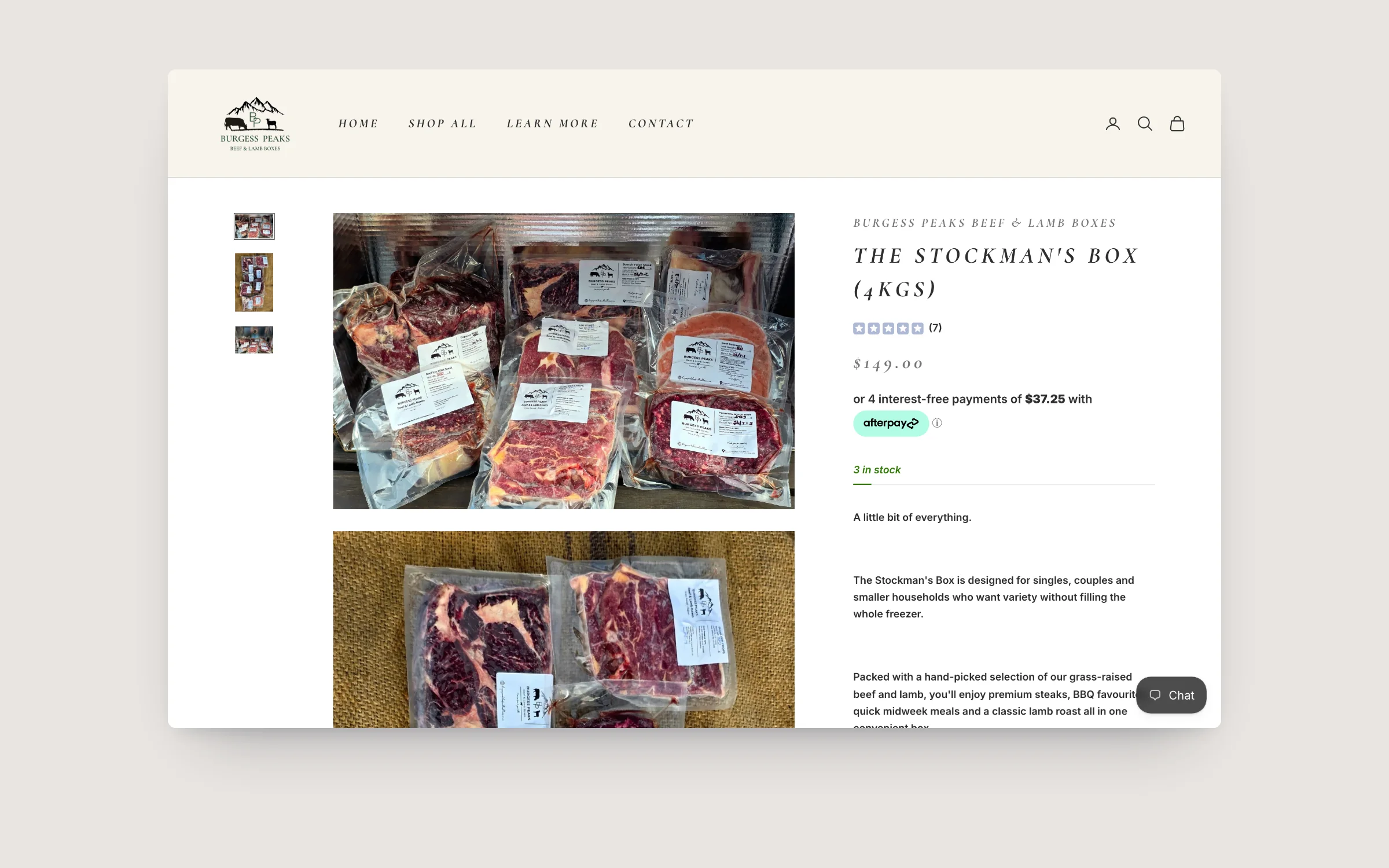
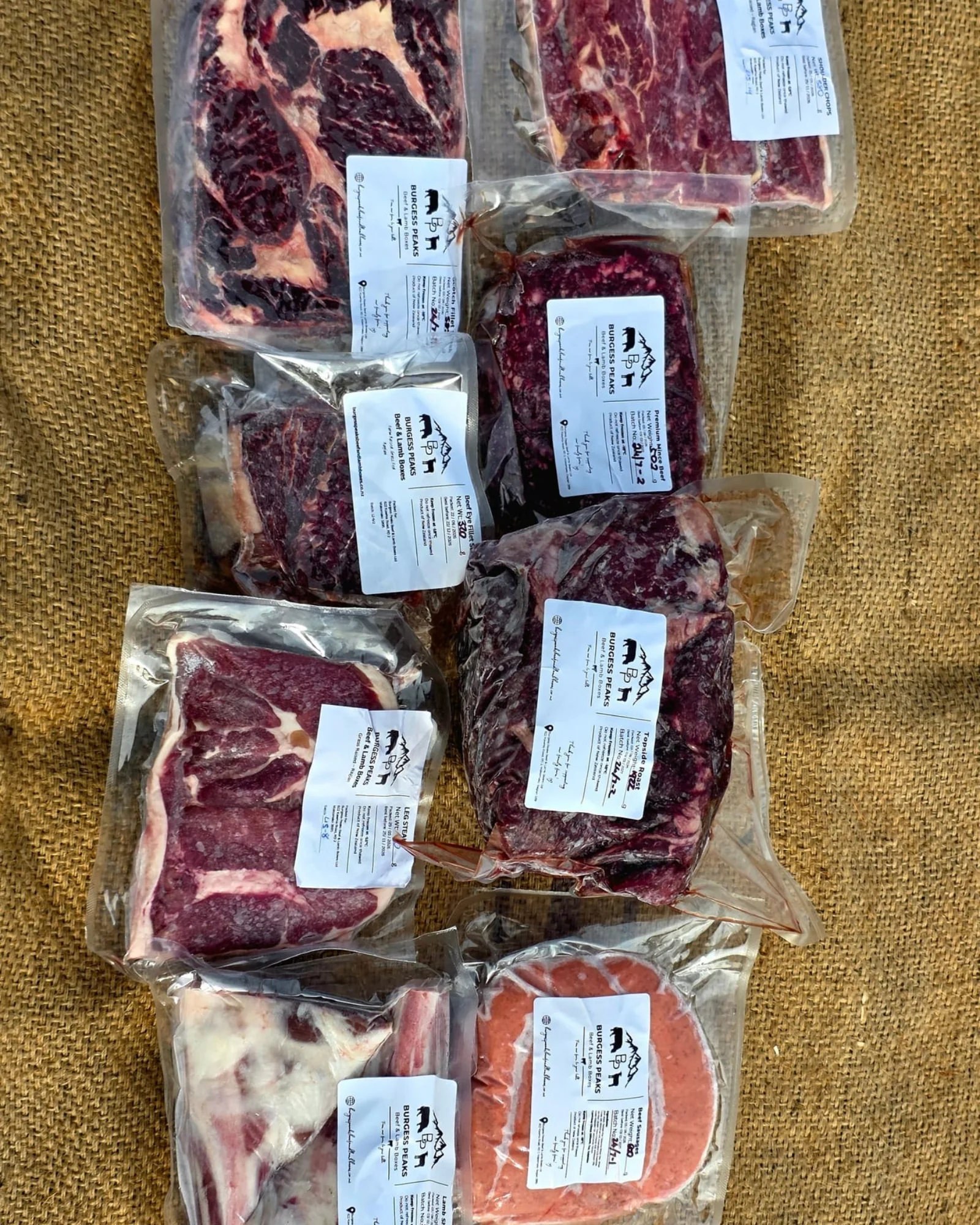
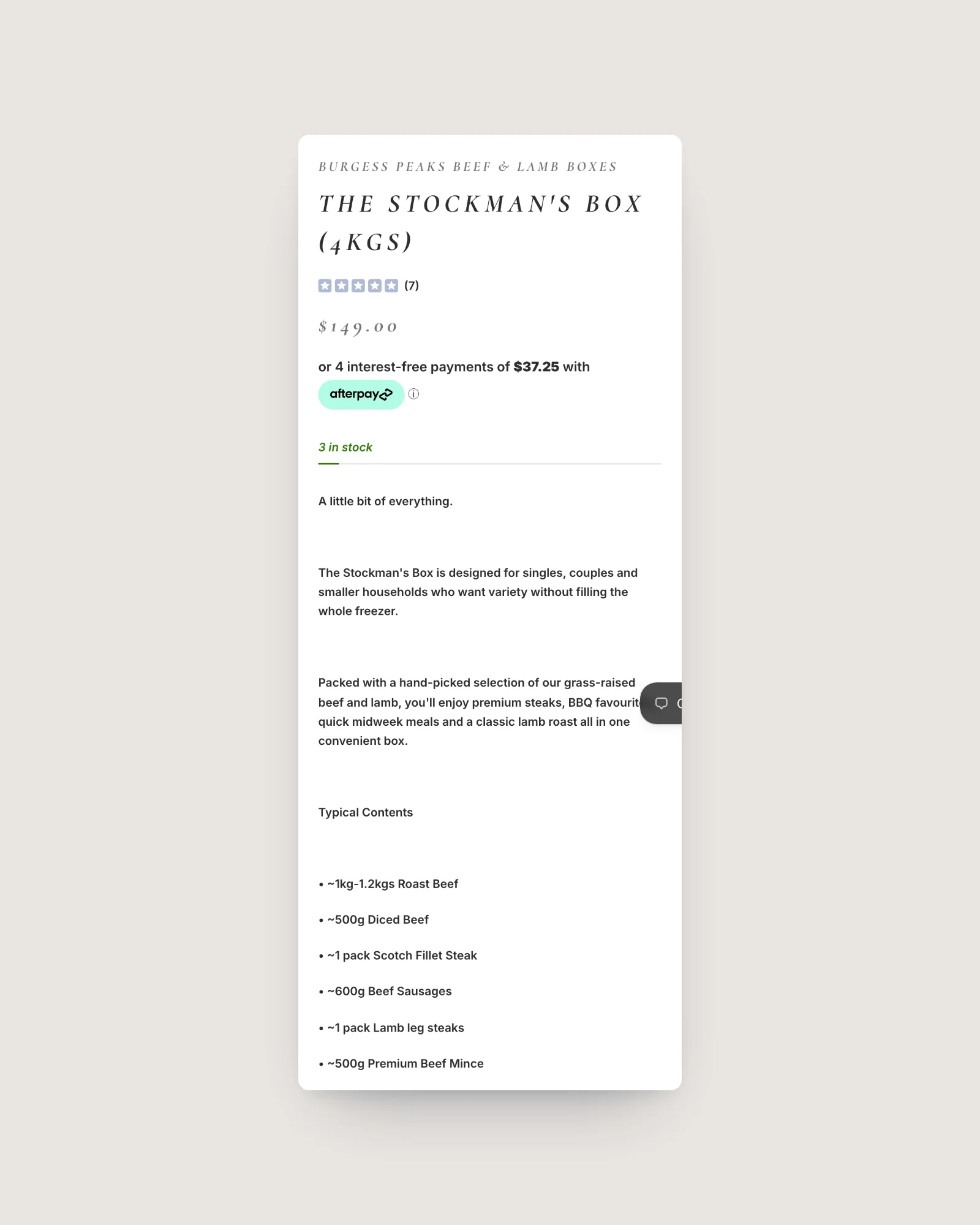
This is where we pushed hardest. Each box leads with real photography of the actual cuts, reviews and a live stock count, and a plain-English description of who the box is for.
Typical contents are listed cut by cut with approximate weights, so a customer knows exactly what arrives. Pay-in-four is shown next to the price, which matters on a considered purchase like a 4kg box.
Pay in four, or subscribe, beside the price
Afterpay’s pay-in-four amount sits beside the price, and a subscription option is offered next to the one-off price. Change the box or the purchase option.
Example beef and lamb box
$100.00$200.00
or 4 interest-free payments of $25.00$50.00 with Afterpay
Delivered once.
Repeat delivery on a subscription, set up through Shopify selling plans.
Example boxes at example prices. Not Burgess Peaks’ prices.
04Mobile
Facebook and Instagram sellingShopify development
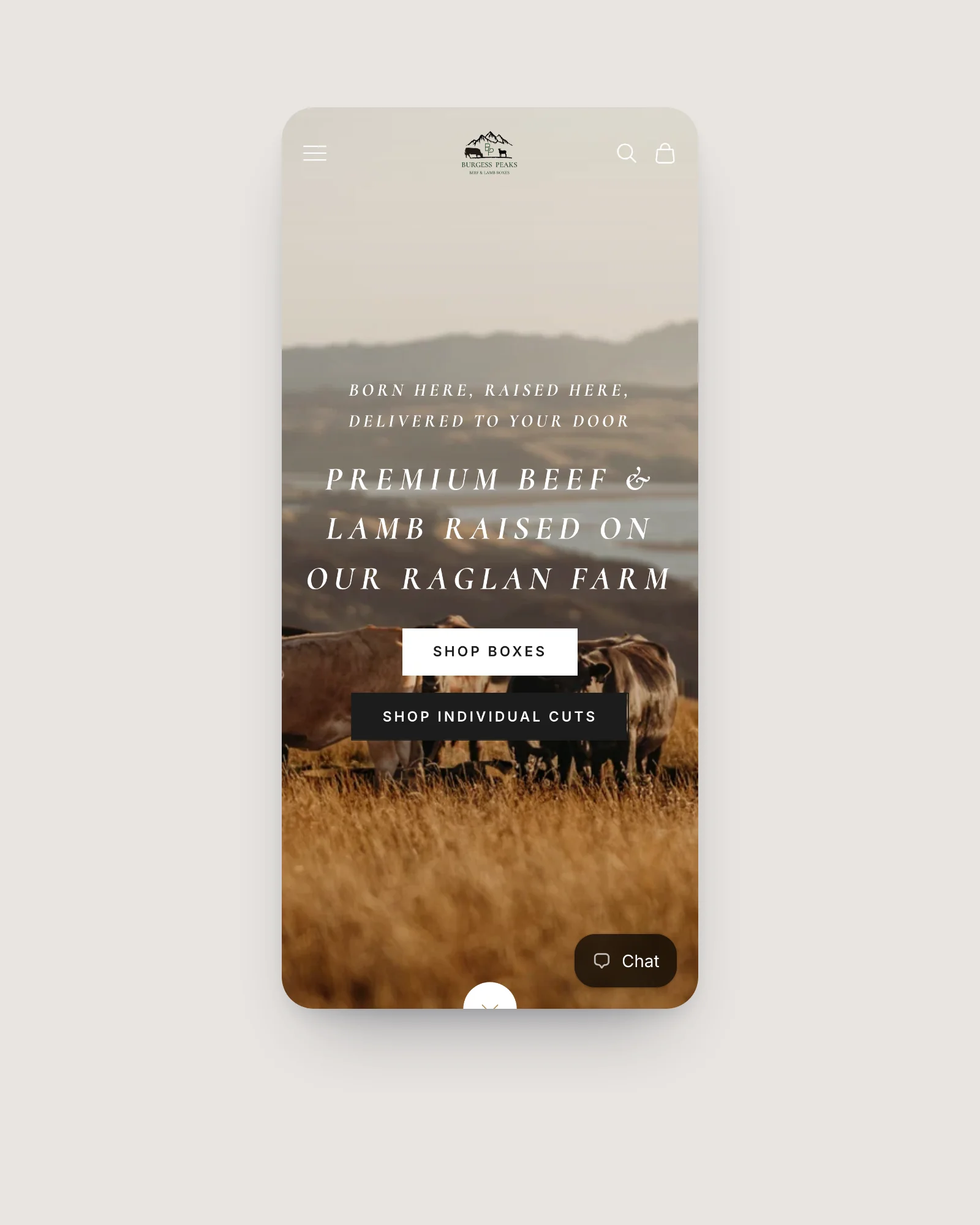
Built for the Facebook and Instagram tap.
A shopper who taps through from Facebook or Instagram lands inside that app's browser on a phone. The mobile store keeps photos, contents and pay-in-four up front, and loads fast enough to hold up there.
Results
A store built for trust and for mobile, and fast enough to survive the Facebook in-app browser.
- 75.7 → 8 MB
- Homepage image memory, cut in a day
- FB + IG
- Catalogue connected to Facebook and Instagram
- Read how we fixed the store that looked broken on Facebook: the full performance case study
Image memory measured by Tripster Developers.
Under the hood
Performance fixShopify theme development
What is running on the store, and what we changed.
The store runs on the Prestige theme, version 11.4, read from the live page source. The rest of the store is built from Prestige sections, with our own code where the theme or an app was not good enough.
- A native reviews section on the homepage. The old review carousel loaded full-size customer photos as thumbnails. We replaced it with a section that reads the review app’s stored reviews and renders them in Liquid, with no images and no extra JavaScript. It is live on the homepage today.
- 36 oversized product photos resized. Phone uploads up to 6000 pixels wide were capped at 2048 pixels on the longest edge using our own Miko Bulk Image Resizer, in one reversible batch. All 82 images across 48 products were checked afterwards: none lost or changed (our project notes, 7 Sep 2026).
- Pay in four, shown early. Afterpay is shown beside the price, and the footer lists Afterpay, Shop Pay, Apple Pay, Google Pay, PayPal and the major cards (live store, Oct 2026).
- Wholesale pricing on the same store. On 9 September 2026 our Miko B2B Wholesale Pricing app went live for trade, event and volume pricing. We measured it before and after install: it added 35 KB of JavaScript, and retail prices stayed exactly as they were (our project notes).
Measured today
Checked again on 3 October 2026.
We re-read the live store and Google’s real-visitor data on 3 October 2026, nearly four weeks after the fix. These figures describe the store as it runs today, including any apps added since.
- Real visitors (Google Chrome UX Report, whole store, phones, 75th percentile, 28 days to 3 Oct 2026): Largest Contentful Paint 1.3 s, Interaction to Next Paint 94 ms, Cumulative Layout Shift 0.00. All three Core Web Vitals are inside Google’s “good” thresholds for real mobile visitors.
- Structured data: product pages output Product schema with brand, category and an Offer priced in NZD; the homepage outputs Organization and WebSite schema with a site search action.
- Subscriptions: product pages carry Shopify selling plans, so a subscription option is offered beside the one-off price.
For similar merchants
If your customers arrive from Facebook or Instagram.
Farm-direct and specialty food brands sell through social posts, and a tap on a post opens the store inside the Facebook or Instagram browser, not Safari or Chrome. Those in-app browsers have far less memory to spare, so a page that is fine on a laptop can fail there.
The fix was not a redesign. It was finding the one page and the one component carrying the weight, replacing it without losing the reviews, and checking the result on a real phone inside the Facebook app. If your social links all point at your homepage, make sure the homepage is not your heaviest page.
Questions
Why do Facebook links to a Shopify store sometimes show a blank page?
Facebook and Instagram open links in their own in-app browser, which has much less memory available than Safari or Chrome. If a page decodes too much image data, often from full-size photos used as small thumbnails, the in-app browser can drop the page and show an empty screen. The link itself is fine, which is why it gets reported as a broken link.
Related case studies
All work Performance fixThe store that looked broken on Facebook Homepage image memory cut from 75.7 MB to 8 MB in one working day, with all 82 images kept.
 Essential oilsThe Good Oil Company A trust-first store that proves quality on every product page, with no app scripts on the homepage.
 Wholesale confectioneryDutchRusk A Shopify Plus trade storefront with live two-way Ostendo sync. About 150 manual order entries a day, now zero.