Real-Time. Bidirectional. Production-Proven.
Connect Shopify to Odoo. One source of truth.
Products, inventory, orders, customers, and invoices synchronized in real-time between your Shopify store and Odoo ERP. No manual exports. No duplicate data entry. Your operations team works in Odoo. Your customers buy on Shopify. The integration handles everything in between.
★★★★★5.0 rating on the Shopify Partner DirectoryLive Odoo Connector in production
What Syncs
Every data type your business depends on.
No partial sync, no daily batch files. Everything flows in real-time.
Products and Inventory
Products created and updated in Odoo push to Shopify automatically: names, descriptions, variants, images, pricing, and barcode data. Inventory levels update in Shopify within seconds of a stock movement in Odoo.
Orders and Fulfillment
Every Shopify order creates a sales order in Odoo immediately. Fulfillment status flows back to Shopify when Odoo marks the delivery done. Cancellations, refunds, and partial fulfillments handled correctly on both sides.
Customers
Customer records synced bidirectionally. New customers from Shopify created as contacts in Odoo with the correct company/individual classification. Odoo customer tags and pricelists mapped to Shopify customer tags and discount groups.
Pricing and Pricelists
Odoo pricelists mapped to Shopify price rules. Wholesale pricing in Odoo automatically drives the correct Shopify prices for B2B customers. Price changes in Odoo push to Shopify without manual intervention.
Invoices and Payments
Shopify payments create Odoo invoices with the correct account mapping. Payment status, refunds, and partial payments reflected accurately in Odoo accounts receivable. Reconciliation ready without manual journal entries.
Multi-Store and Multi-Warehouse
Multiple Shopify stores, including expansion stores from our Shopify Plus development work, connected to one Odoo instance. Each store mapped to separate Odoo warehouses, pricelists, and customer groups. Consolidated reporting in Odoo across all storefronts and fulfillment locations.
Integration Approach
Built for resilience, not just connectivity.
- 01
Data & Process Audit
We map your current Odoo chart of accounts, product attribute structure, warehouse setup, and pricelist logic against your Shopify store structure. Every field mapping is documented and confirmed before development starts.
- 02
Connector Build
Middleware built using Shopify webhooks and the Odoo external API, by the same engineers behind our Shopify app development. Event-driven architecture, so no polling and no cron jobs that miss events. Transformation layer handles field mapping, data type conversion, and business logic.
- 03
Historical Data Migration
Existing Shopify customers, products, and order history imported into Odoo. Existing Odoo products pushed to Shopify. Both systems start in a consistent state from day one.
- 04
Parallel Testing
Full integration tested on staging environments. Real orders processed through the complete flow: Shopify checkout, Odoo sales order creation, warehouse pick, delivery confirmation, invoice generation. Every edge case documented and tested.
- 05
Go-Live and Monitoring
Production cutover with a sync health dashboard showing queue depth, error rates, and last successful sync times. Monitoring alerts configured for critical failures. 30-day hypercare support with same-day response to any sync issues.
Our Odoo Connector
A connector we built, run, and improve continuously.
The Tripster Developers Live Odoo Connector is not a one-off integration project we build and hand over. It is a maintained connector product we deploy for each client, monitor in production, and update as Shopify and Odoo APIs evolve. You get the stability of a maintained product, not a custom script that breaks when Shopify releases a new API version.
Clients on our Odoo integration are supported with SLA-backed monitoring, quarterly connector updates, and direct access to the development team when configuration changes are needed.
Selected work
Integrations running in production today.

FMCG distribution
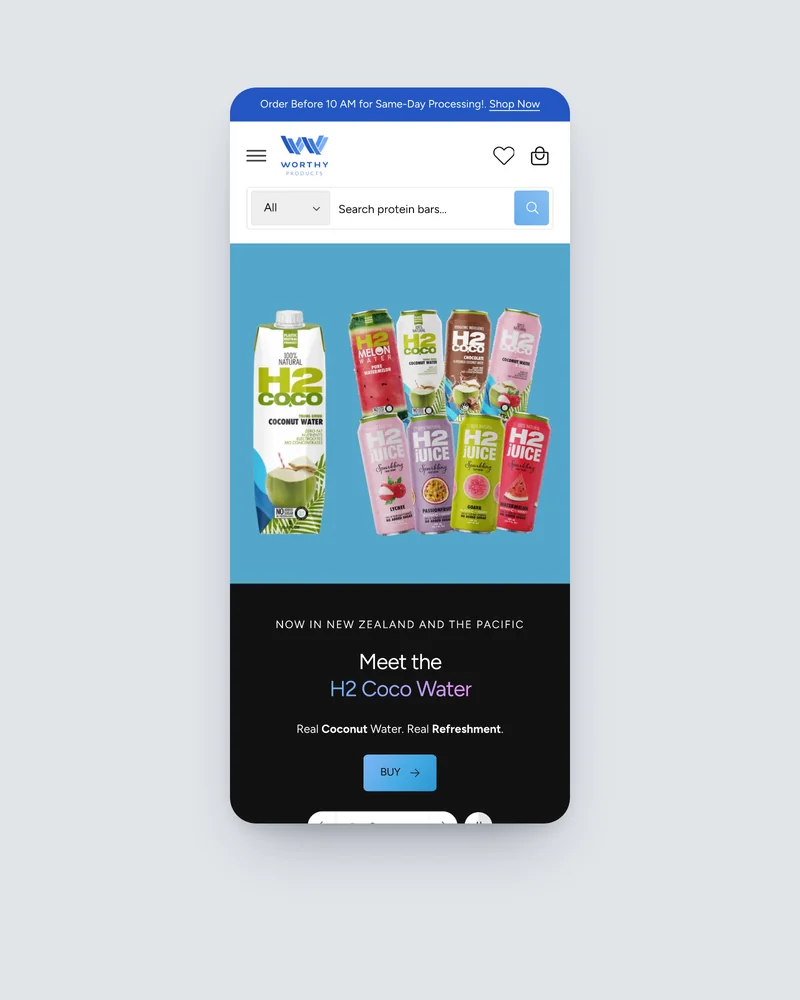
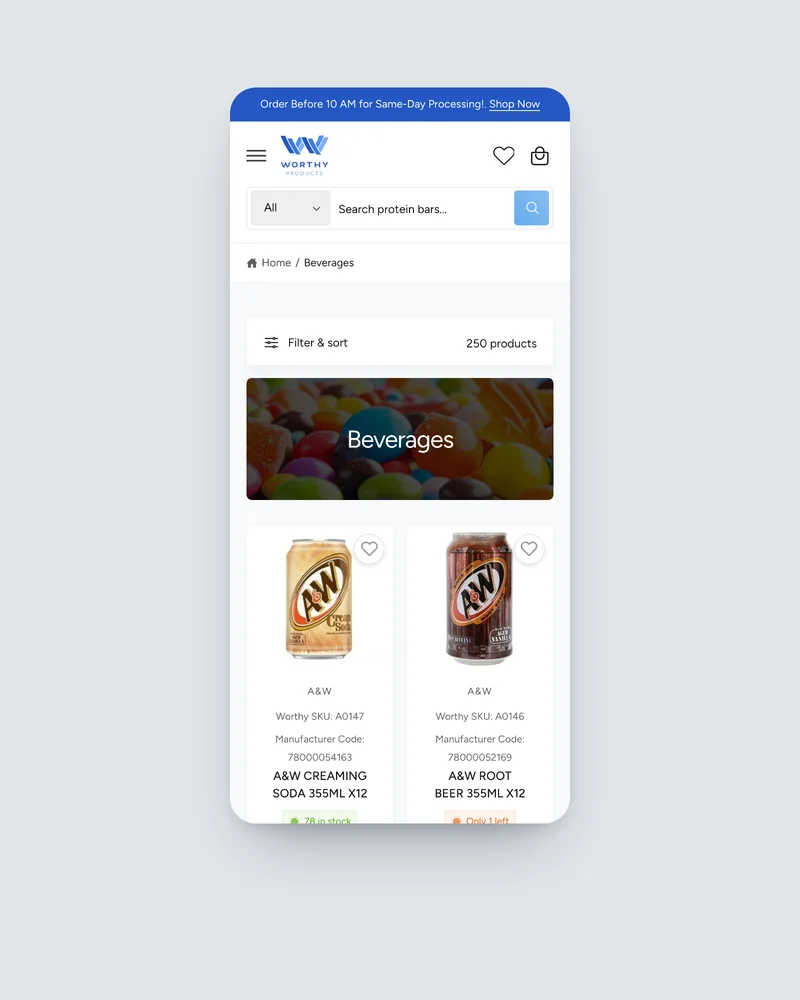
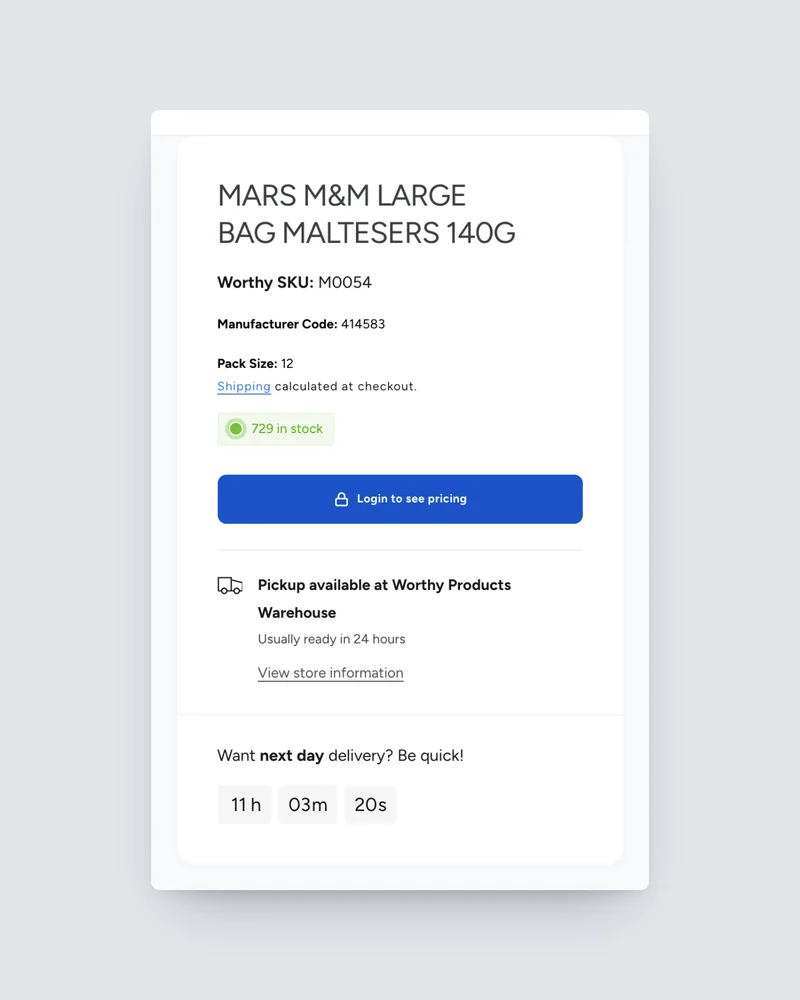
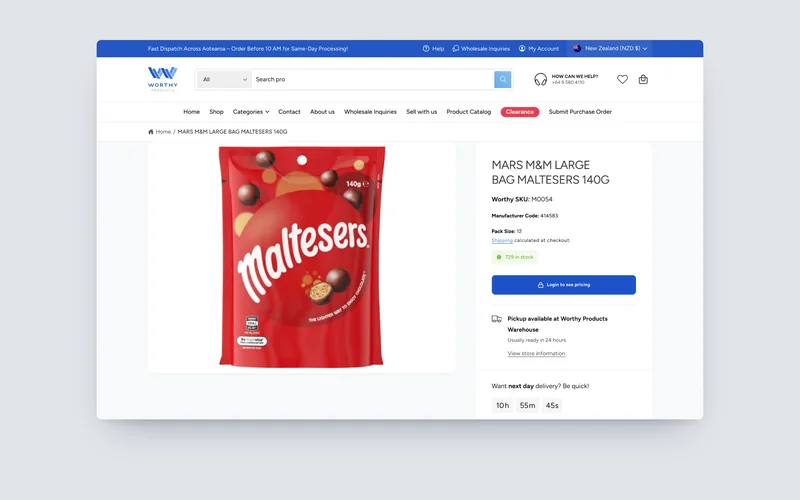
Worthy Products
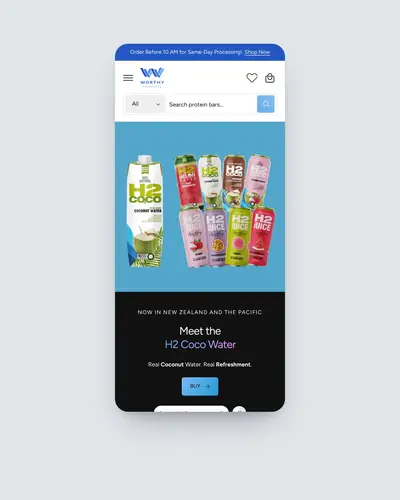
An FMCG distributor supplying retail stores across New Zealand.
A wholesale storefront wired to Odoo by a connector that self-heals every hour. 50 to 80 manual order entries a day, now zero.

Wholesale confectionery
DutchRusk
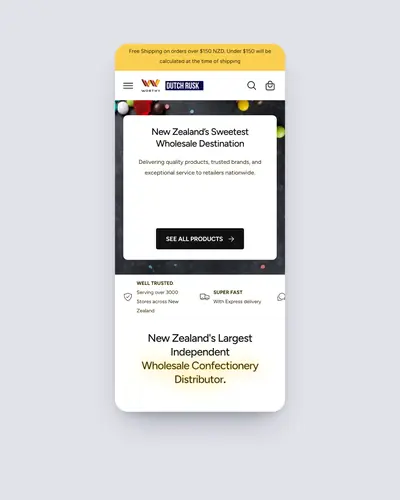
New Zealand's largest independent wholesale confectionery distributor.
A Shopify Plus trade storefront with live two-way Ostendo sync. About 150 manual order entries a day, now zero.

Watch parts
eWatch Parts
The biggest watch parts supplier in Texas.
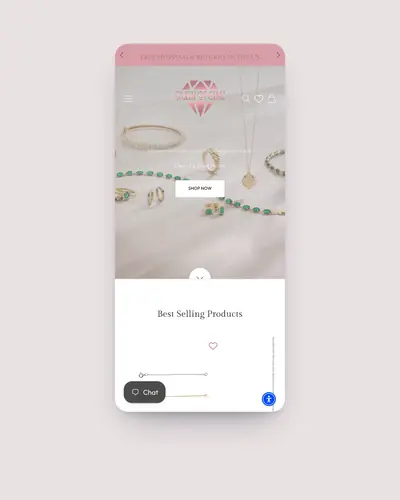
One catalog of 18,000+ products kept in sync across Shopify, eBay, Amazon and Walmart.
Shopify Odoo Integration Questions
Which Odoo versions do you support?
Odoo v12 through v18, on Odoo Online, Odoo.sh and self-hosted. We integrate over Odoo's standard API rather than patching core, so an Odoo upgrade does not mean rebuilding the integration.
What data syncs between Shopify and Odoo?
Products and variants, inventory across multiple warehouses, orders, fulfillments, refunds and customers. Sync is two-way on a queue, so a Shopify sale decrements Odoo stock immediately and an Odoo adjustment reaches Shopify without an export.
How does Odoo handle Shopify product variants?
This is where most integrations break. Shopify variants and Odoo product templates with attribute values are different data models, so we map them explicitly rather than matching on SKU alone. Variants added later in either system are picked up without a full re-import.
Can Odoo manage stock across multiple warehouses?
Yes. Odoo multi-warehouse maps to Shopify locations so stock shows against the correct location and fulfillment routes from the right warehouse. Location-aware inventory is one of the strongest reasons to run Odoo behind Shopify.
What happens if the Odoo sync fails?
Nothing is lost. Failed jobs stay queued with their payload, retry on a backoff schedule, and appear in a log with the record and reason attached. The failure mode we design against is silent drift, where two systems quietly disagree for weeks.
Can Odoo connect to Amazon, eBay or other marketplaces?
Yes. The same architecture handles marketplace channels, so Odoo holds one stock and order record behind Shopify plus Amazon, eBay, Etsy, Walmart or TikTok Shop. Each channel becomes another consumer of the same inventory pool.
Can you connect Odoo to Magento, WooCommerce or BigCommerce?
Yes. We build and maintain Odoo connectors for Magento 2, WooCommerce, BigCommerce and PrestaShop. Running two storefronts on different platforms is common and Odoo is usually the right master catalog.
Is there a free Odoo Shopify connector?
There are free and open-source modules on the Odoo Apps store and they can work for a small catalog. Where they usually fail is variant mapping, partial refunds, multi-warehouse stock and silent failures. We will tell you when a free module is genuinely enough.
How does this compare to the Emipro or Webkul connectors?
Both ship capable, widely used modules. The practical difference is the delivery model: they sell a module you configure yourself, we install, map and test against your actual data and stay responsible for it. If your existing connector mostly works, we will say so.
Can Odoo sync with Xero or QuickBooks instead of Odoo accounting?
Yes. Odoo accounting can be the ledger, or we bridge Odoo to Xero or QuickBooks so invoices and payments land where your accountant already works. Which is right depends on whether you want Odoo to own finance or feed it.
Can we get Odoo data into Power BI or Metabase?
Yes. We expose a read layer from Odoo for Power BI, Metabase, Looker or BigQuery so reporting does not run queries against your live operational database and slow it down.
Will the integration slow down our Odoo instance?
No. Sync runs on a rate-limited queue rather than firing synchronous writes on every event, and bulk operations are batched. Reporting comes from a read layer so dashboards never contend with operational writes.
How long does an Odoo Shopify integration take?
A standard build is 2 to 4 weeks: connection and authentication, field mapping against your real data, then a parallel run before cutover. Heavily customized Odoo instances take longer and we will tell you which you are before quoting. Our step-by-step guide to connecting Shopify to Odoo shows each stage.
Do you work with Odoo instances someone else built?
Yes. Most of our integration work is on Odoo built by another partner, including heavily customized installs. We start by reading what is actually there rather than assuming a standard setup.
Can you handle Odoo B2B pricelists and Shopify Plus B2B?
Yes. Shopify Plus B2B companies, locations and catalogs map onto Odoo partners and pricelists so wholesale pricing lives in one place. We also build B2B on standard Shopify where Plus is not justified.
Is Odoo or Shopify better for ecommerce?
They are not really competitors. Shopify's storefront, checkout and app ecosystem are far ahead for selling; Odoo is far ahead for stock, purchasing, manufacturing and accounting. The usual answer is Shopify in front, Odoo behind, connected properly.
What does an Odoo integration cost?
Typically USD 1,800 to 50,000, depending on how many objects sync, how customized the Odoo instance is, and whether marketplaces are involved. Quoted fixed-price before work starts.
How do we start an Odoo integration?
Tell us your Odoo version, how it is hosted, your catalog size and which systems need to talk. We come back with a fixed-price scope and a field mapping plan, at no charge.











Ready to connect Shopify and Odoo?
Share your Odoo version, module setup, and Shopify store structure. We will review the integration requirements and come back with a scope, timeline, and fixed-price quote.