eWatch Parts
- Location
- Texas, USA
- Industry
- Watch parts
- Platform
- Advanced Shopify, multichannel
- Scope
- Storefront, SureDone multichannel sync, event campaign
The biggest watch parts supplier in Texas. One catalog of 18,000+ products, kept accurate on Shopify, eBay, Amazon and Walmart.
Visit the store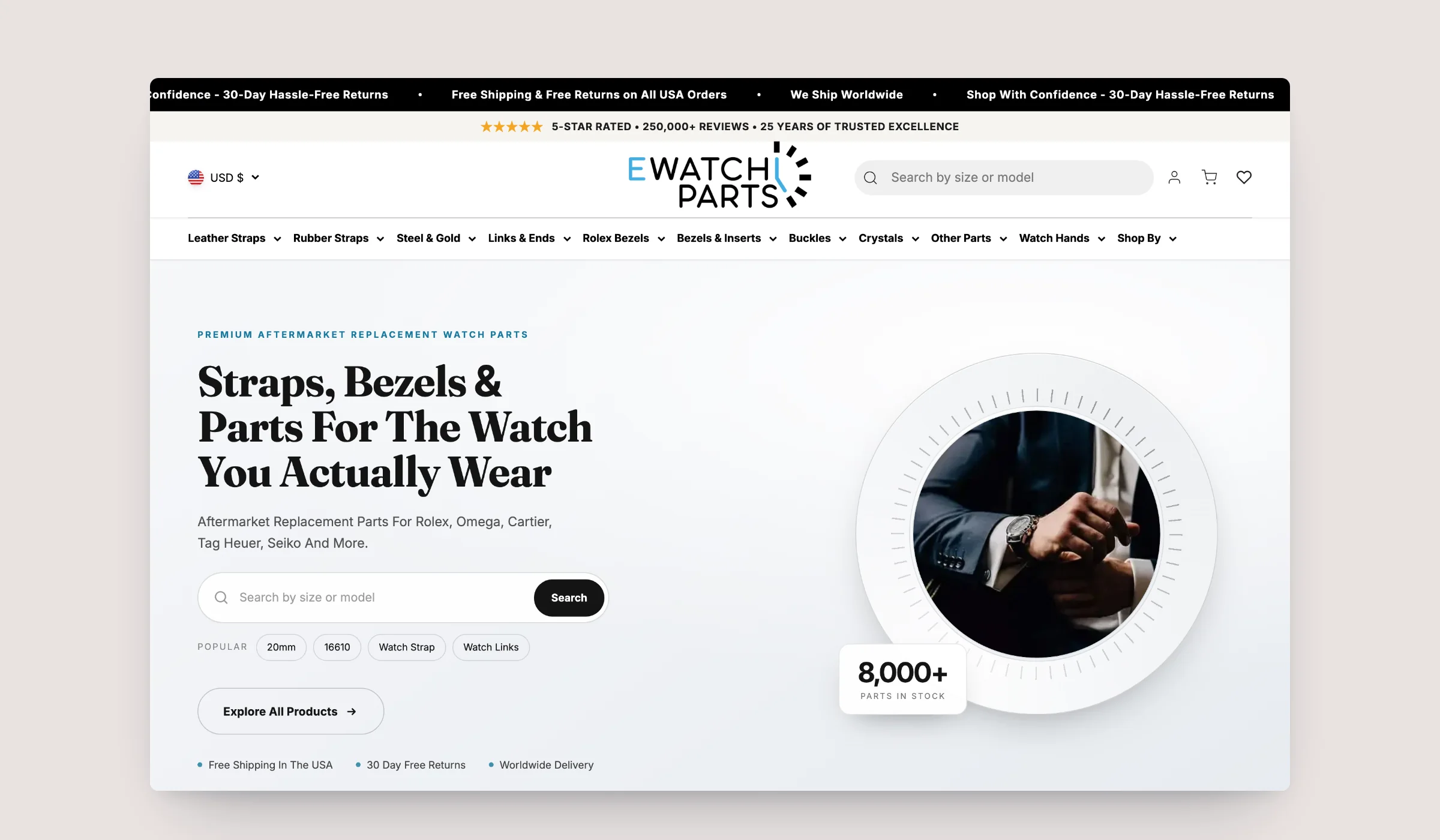
Capabilities proven here
- 01Multichannel marketplace sync
- 02Catalog at scale
- 03Search and fitment UX
- 04Variant swatches and size chips
Services behind this work Shopify development/Shopify theme development
The brief
eWatch Parts sells straps, bezels, links and parts for the watches people already own. The catalog is enormous, the variants run into the tens of thousands, and every listing has to be right on four channels at once.
The storefront also has a harder job than most: a customer has to find the one part that fits their watch, by size, colour or brand, without knowing the part number.
Services & technology
- Storefront design and build
- Search and fitment UX
- Multichannel catalog sync
- Event campaign
01Homepage
Search and fitment UXShopify theme development
Find the part for the watch you actually wear.
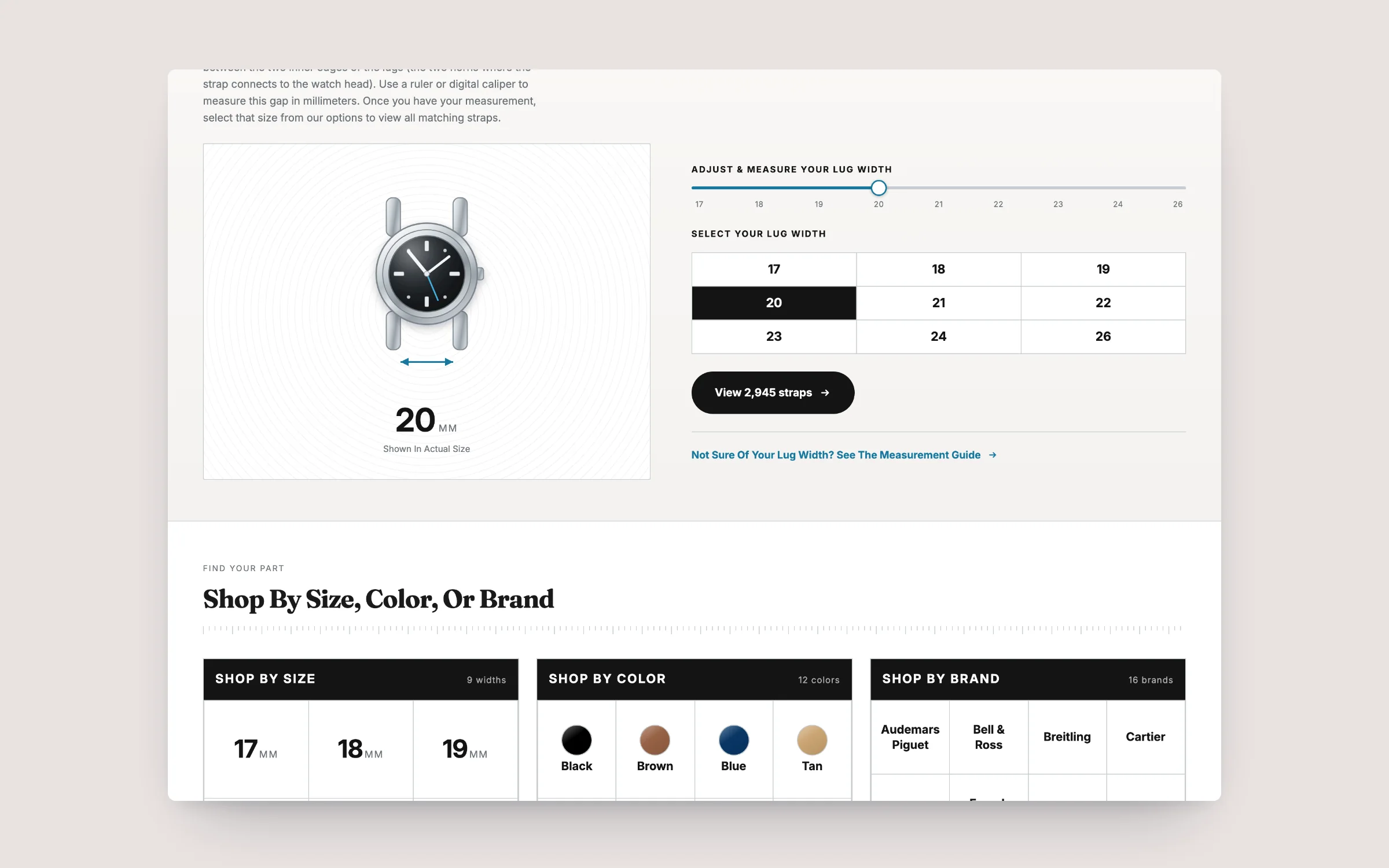
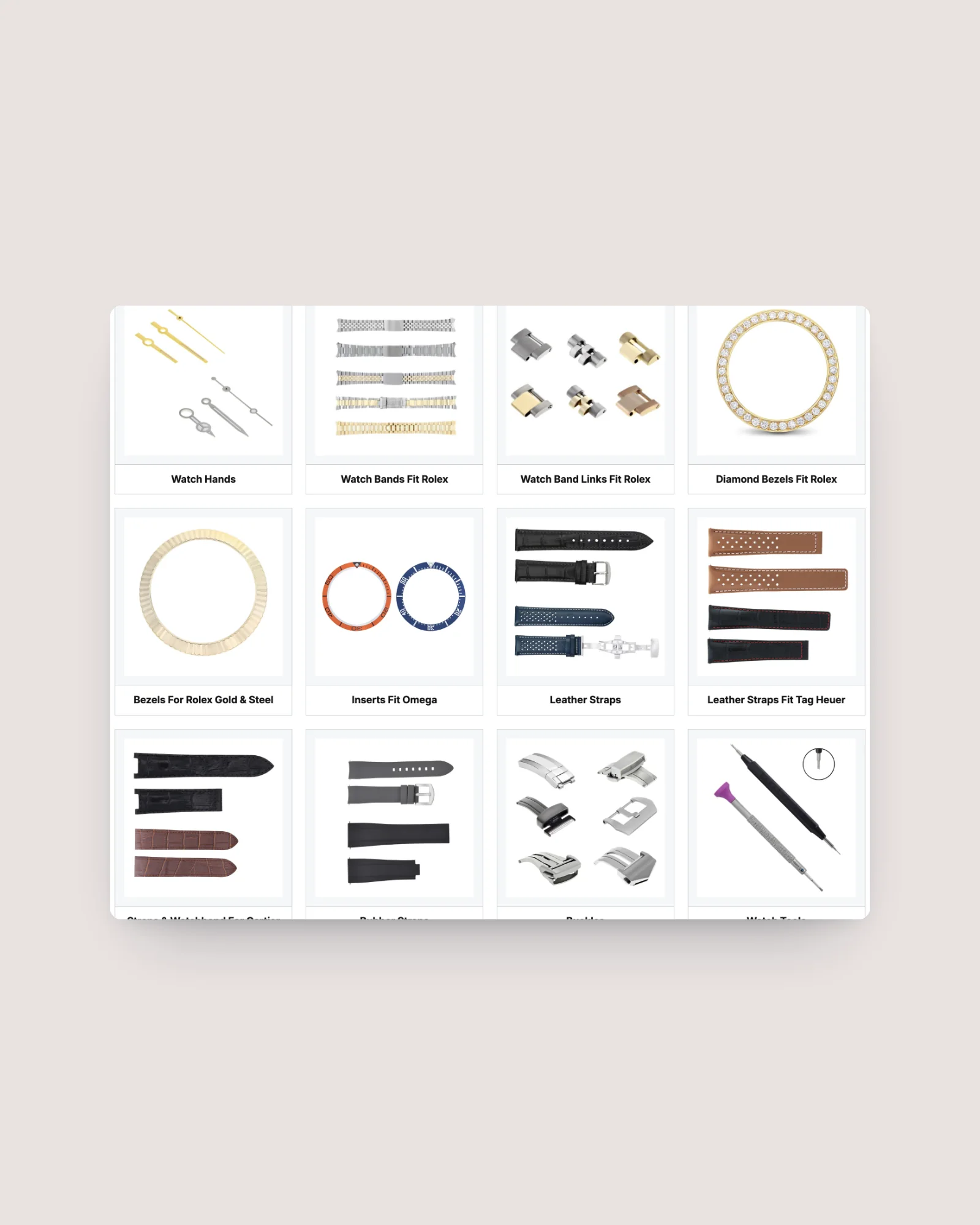
The homepage puts a search by size or model front and centre, with quick picks for the most searched sizes and references. Below it, a lug-width finder helps a customer measure their own watch, then "Shop By Size, Color, Or Brand" routes them into the right range.

02Collections & filtering
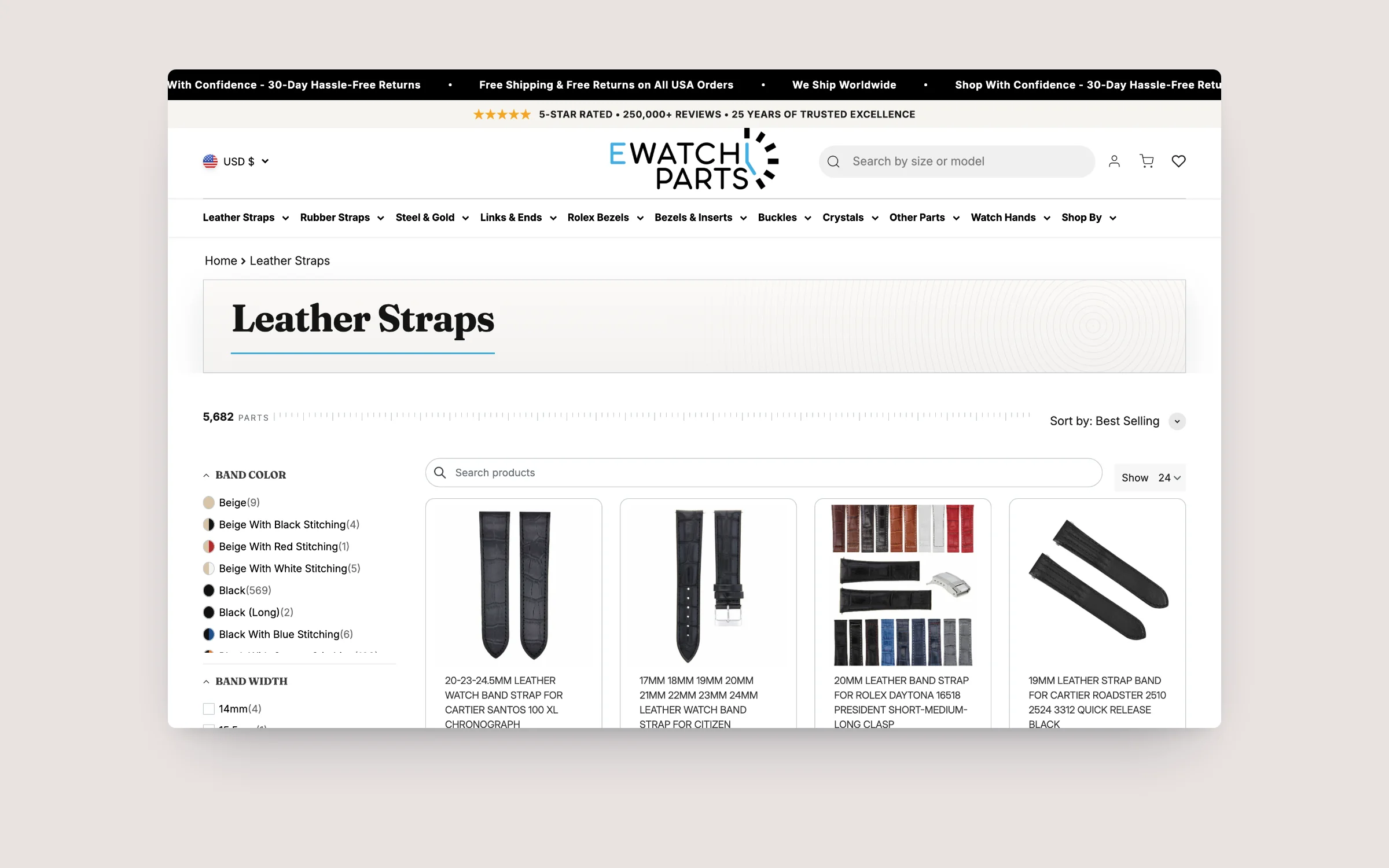
Thousands of parts, narrowed to the one that fits.
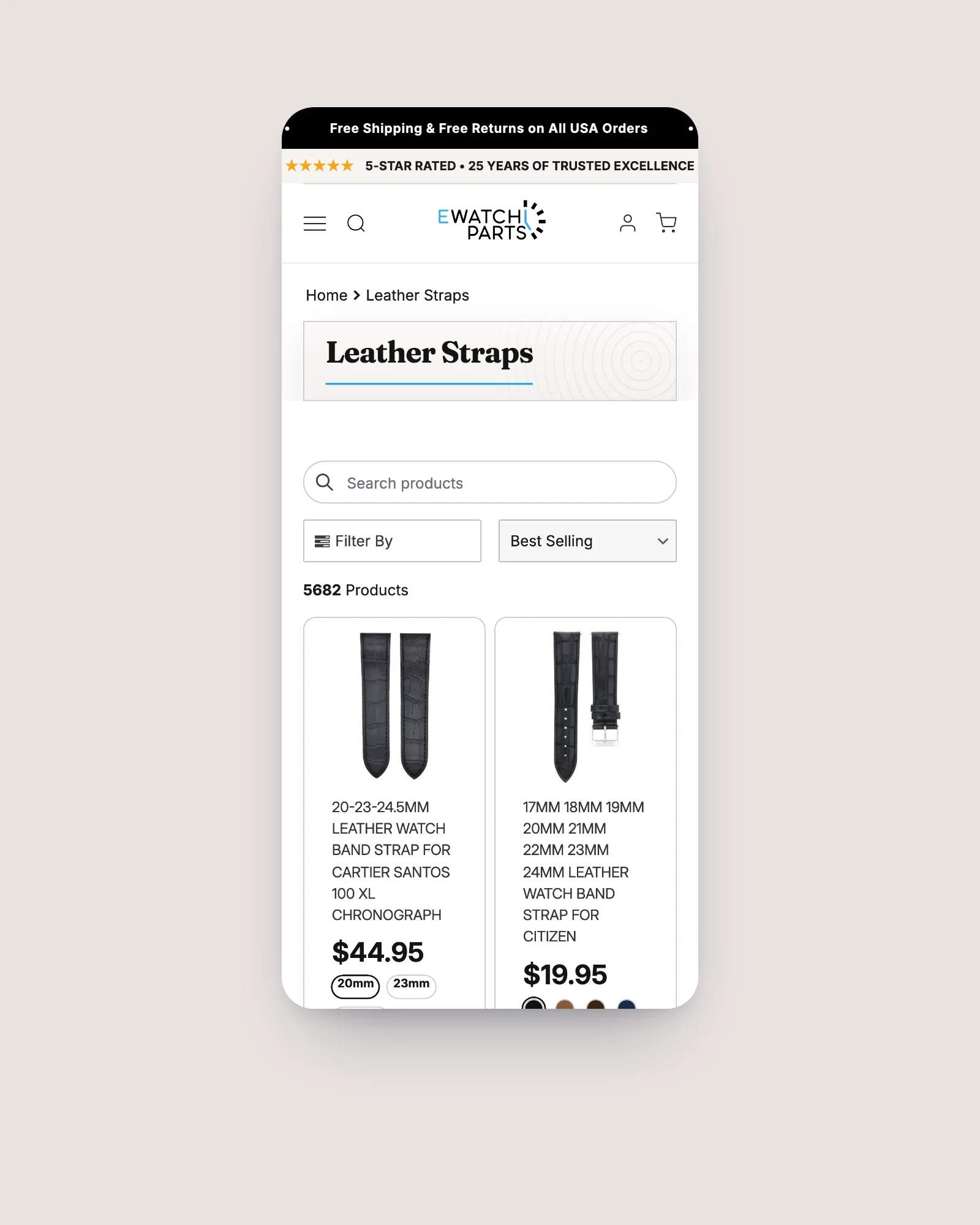
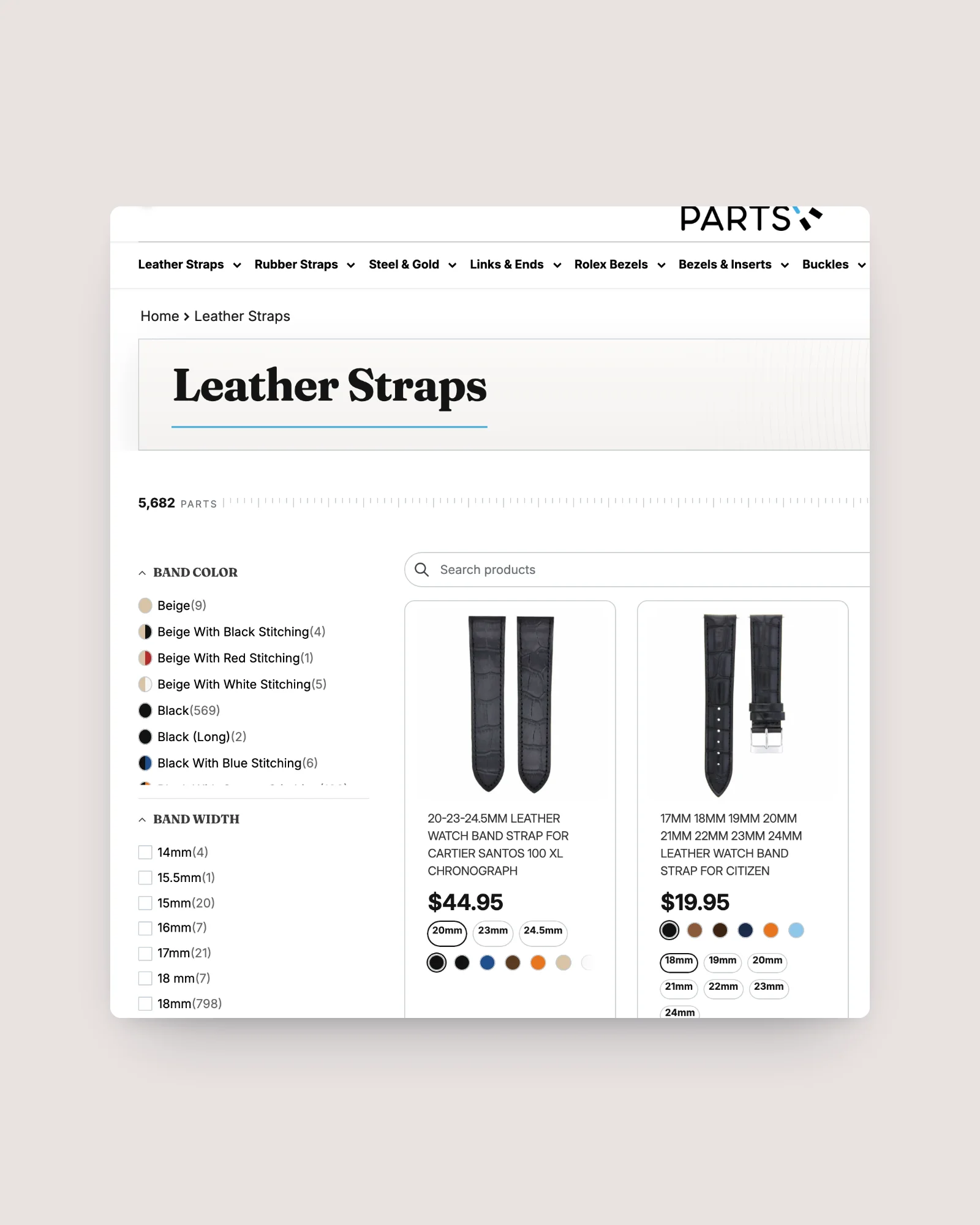
Collections carry a live part count and a filter panel built around how people shop for parts: band colour, width and fit. The mega menu mirrors the same structure, from leather and rubber straps to Rolex bezels, crystals and watch hands.
03Product page
Multichannel marketplace syncShopify development
Variant swatches and size chipsShopify theme development
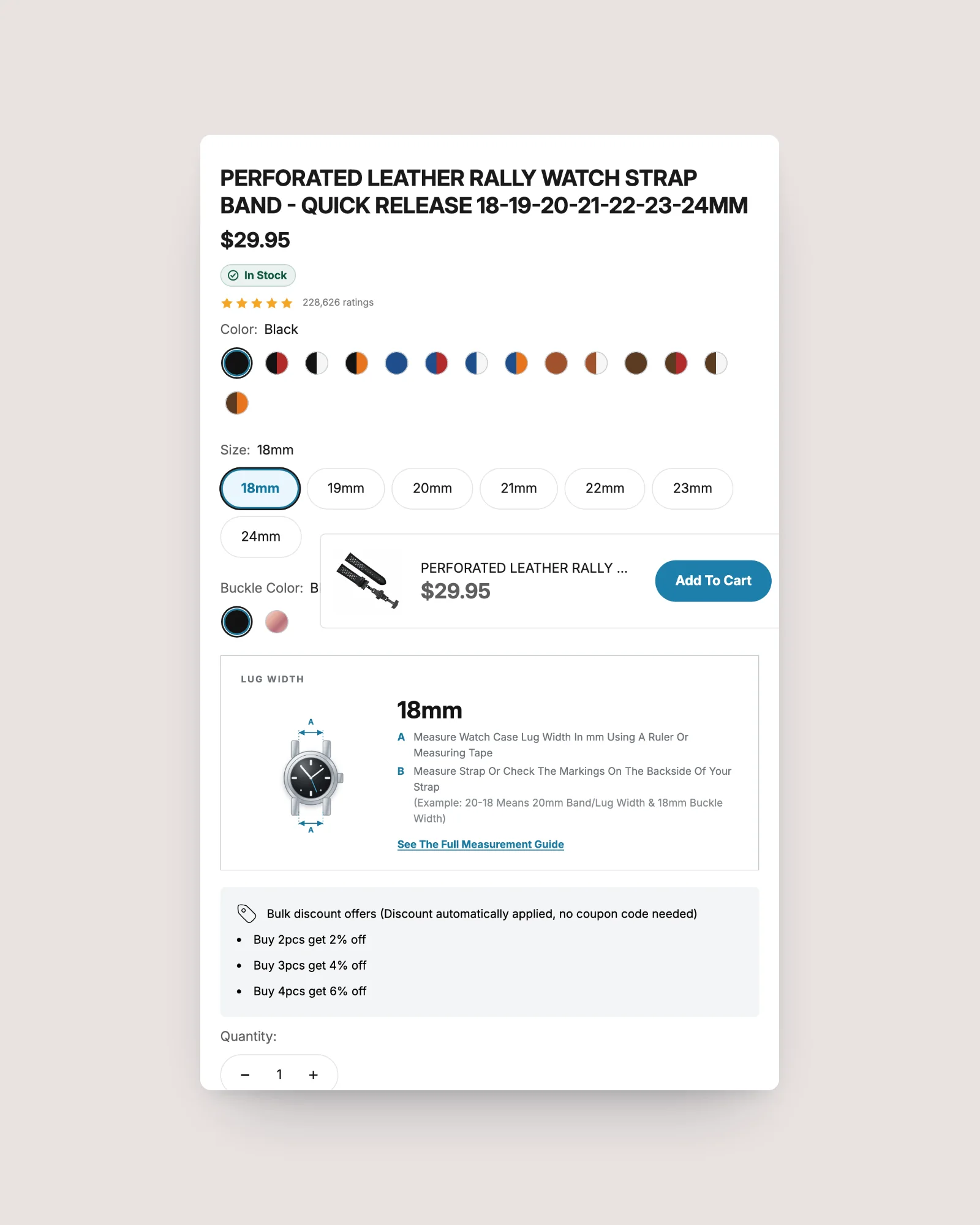
Every colour and size on one listing.
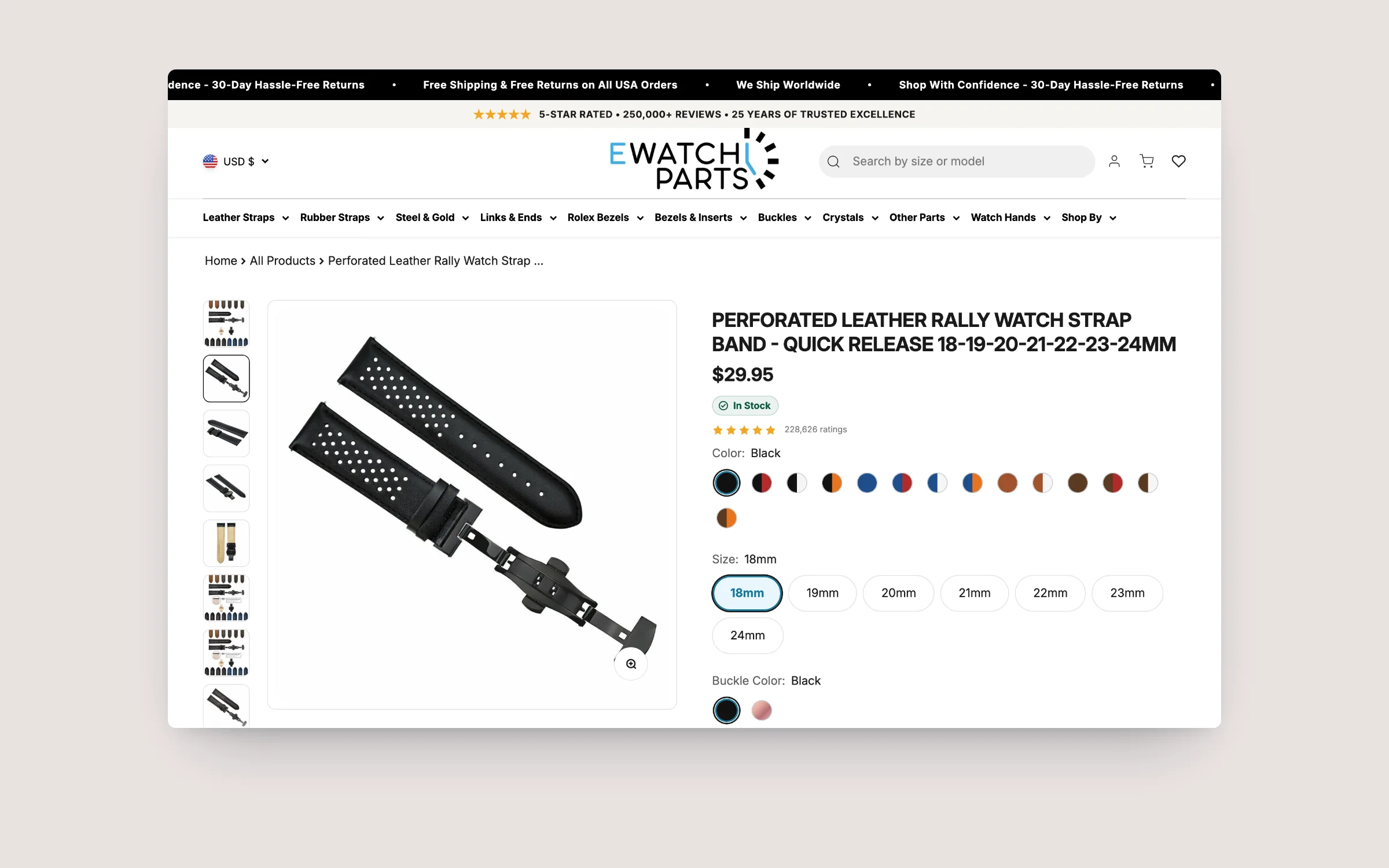
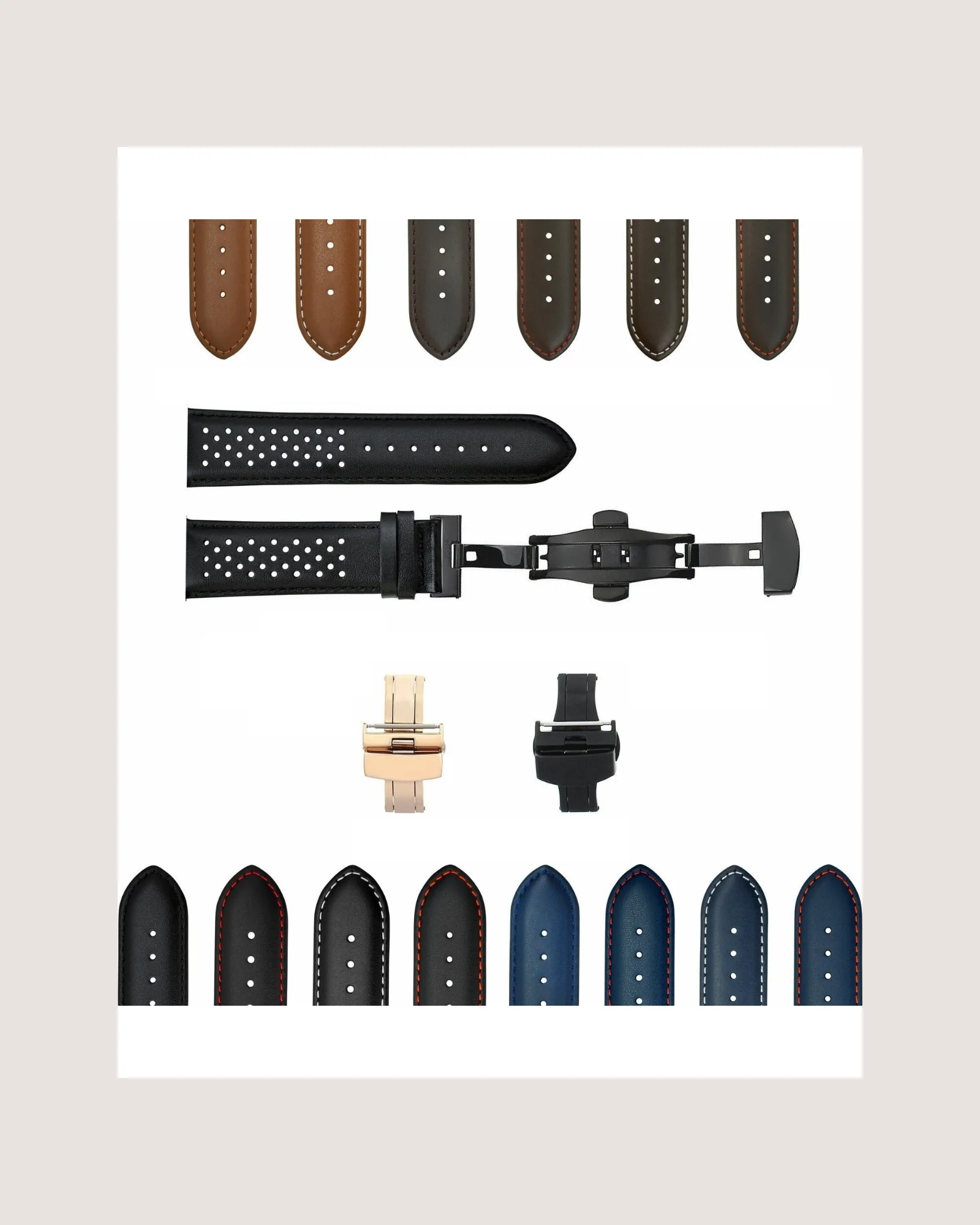
A single product page carries every colour, size and buckle option as visual swatches and size chips, with stock shown up front. Specifications, shipping, returns and payment details sit in tidy tabs underneath.
Because the same listing feeds every marketplace, a customer sees the same part, price and stock status wherever they find it.
Sell on one channel, update all four
The same listing feeds Shopify, eBay, Amazon and Walmart, so a sale on one channel updates the stock everywhere. Pick a channel to make a sale.
- Shopify5 leftSold 1
- eBay5 leftSold 1
- Amazon5 leftSold 1
- Walmart5 leftSold 1
One catalog record
SureDone updates the count once
Every channel now shows the same stock
An example strap with an example stock count. Not eWatch Parts’ data.
04Mobile
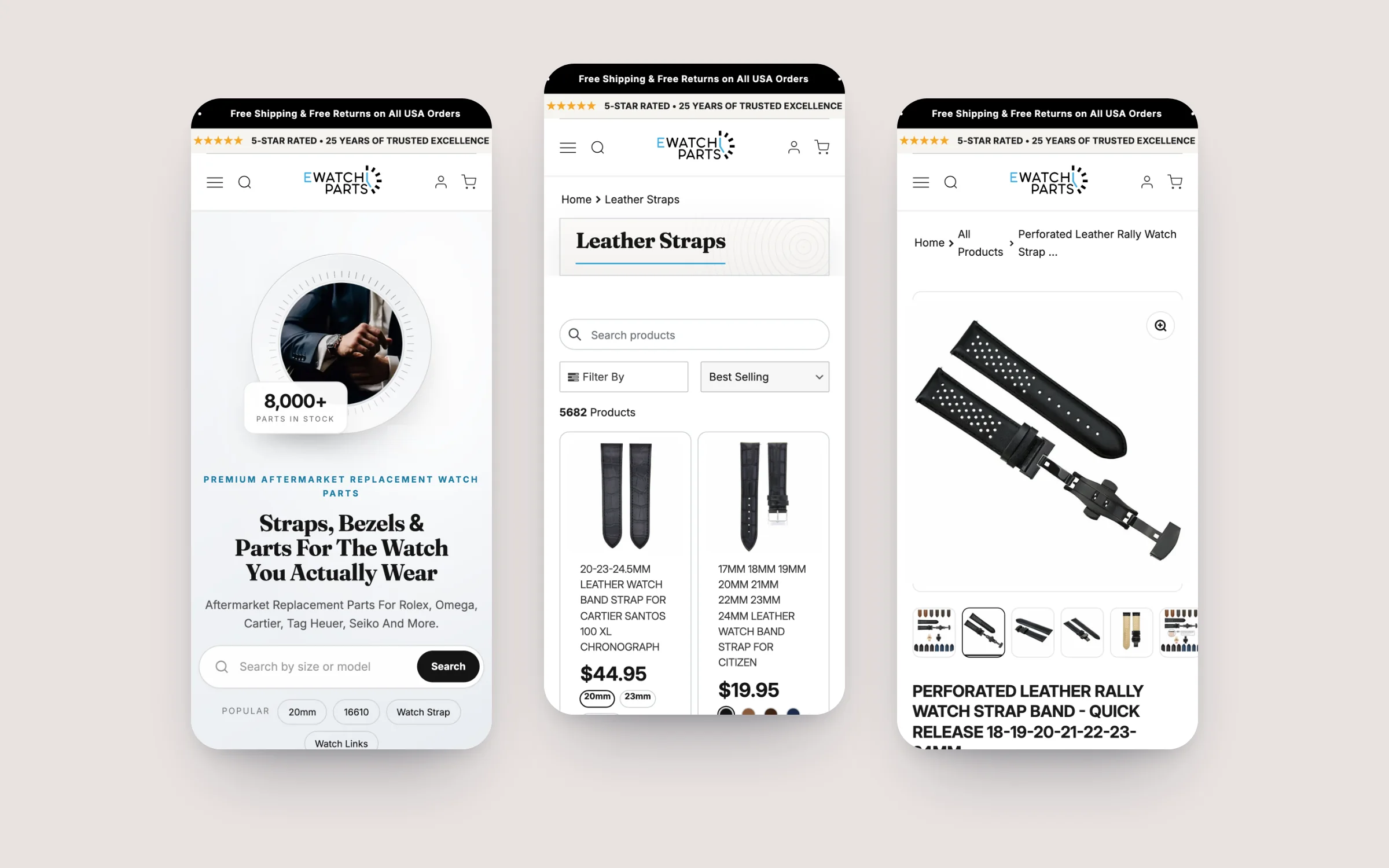
Built to be shopped on a phone.
Search, filters and variant pickers all work at phone size, so a customer can measure a lug width and order the right strap in the same visit.
Results
Catalog at scaleShopify development
One catalog, accurate everywhere it sells. And when we ran a targeted event campaign for the brand, it moved the numbers well past a normal day.
- 18,000+
- Products kept in sync
- 80,000+
- Variants accurate on every channel
- 300×
- Visitors on an event campaign
- 5×
- Sales on the same campaign
Figures supplied by eWatch Parts. The 300× and 5× results are for a specific event campaign, measured against their own normal-day baseline.
Questions
What does SureDone actually do for a multichannel Shopify seller?
It sits above Shopify, eBay, Amazon and Walmart as one source of truth for listings, pricing and inventory. A change made once in SureDone pushes out to every channel it is connected to, instead of someone updating four separate seller accounts by hand every time a price or stock level changes.
Why do listings drift out of sync across marketplaces in the first place?
Because each marketplace has its own inventory count, its own listing edit history and its own update speed. Without a sync layer, a sale on one channel does not reduce stock on the others fast enough, which is how a seller ends up overselling a part they no longer have.
How many products can a multichannel sync layer realistically handle?
It scales with the catalog, not the other way around. eWatch Parts runs 18,000+ products and 80,000+ variants through the same setup that would handle a few hundred, because the sync logic does not care how large the catalog gets, only that it is described consistently.
Does running four sales channels actually convert better than running one?
It reaches more buyers who were never going to shop on a standalone Shopify store in the first place, particularly on eBay and Amazon where shoppers search the marketplace directly. Conversion rates lift when a customer sees accurate stock and pricing everywhere they look, rather than a listing that is technically live but practically unreliable.
Related case studies
All work Fine jewelryQueen of Gemz A full store revamp, with collections filtered by gemstone, cut, colour and material.
 Wholesale confectioneryDutchRusk A Shopify Plus trade storefront with live two-way Ostendo sync. About 150 manual order entries a day, now zero.
 FMCG distributionWorthy Products A wholesale storefront wired to Odoo by a connector that self-heals every hour. 50 to 80 manual order entries a day, now zero.