Story of India
- Location
- Ships worldwide
- Industry
- Multi-designer boutique
- Platform
- Shopify
- Scope
- Store build: design, catalogue structure, product pages
A multi-designer boutique of Indian labels, from apparel and accessories to home. We built a visual-first store that keeps dozens of designers easy to browse.
Visit the store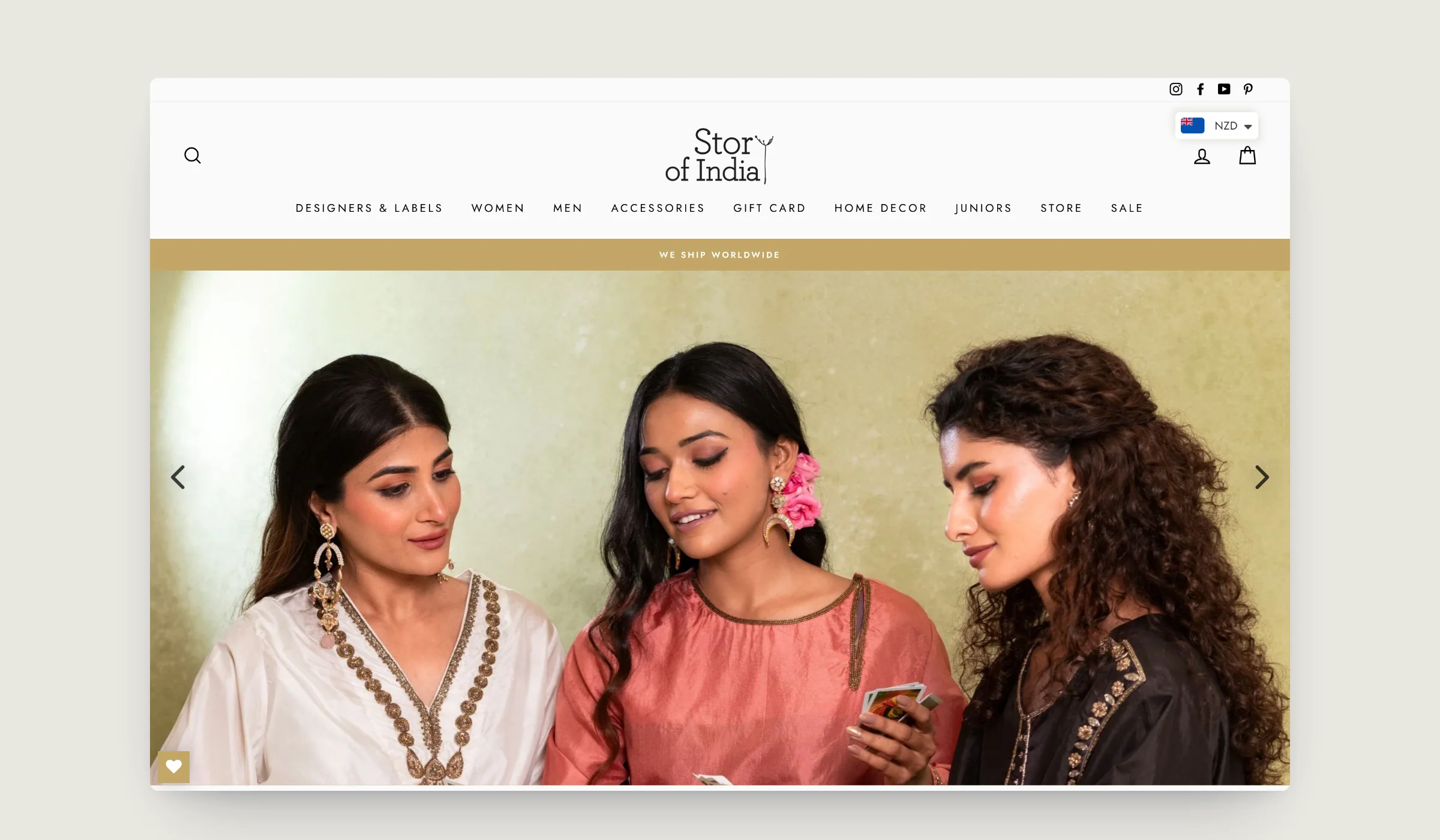
Capabilities proven here
Services behind this work Shopify development/Shopify theme development
The brief
Story of India brings together Indian designers and labels, inspired by artisans and made for everyday luxury. That means many brands, many categories and a lot of photography, sold to customers around the world.
The store had to make a large, varied catalogue feel curated rather than crowded.
Selling worldwide from India adds its own layer: prices, sizes and delivery have to make sense to a shopper in another country, and a large set of designer labels has to stay easy to navigate as it grows.
Services & technology
- Store design and build
- Designer and category structure
- Product page and size guides
- Wishlist
01Homepage
Seasonal, editorial, shoppable.
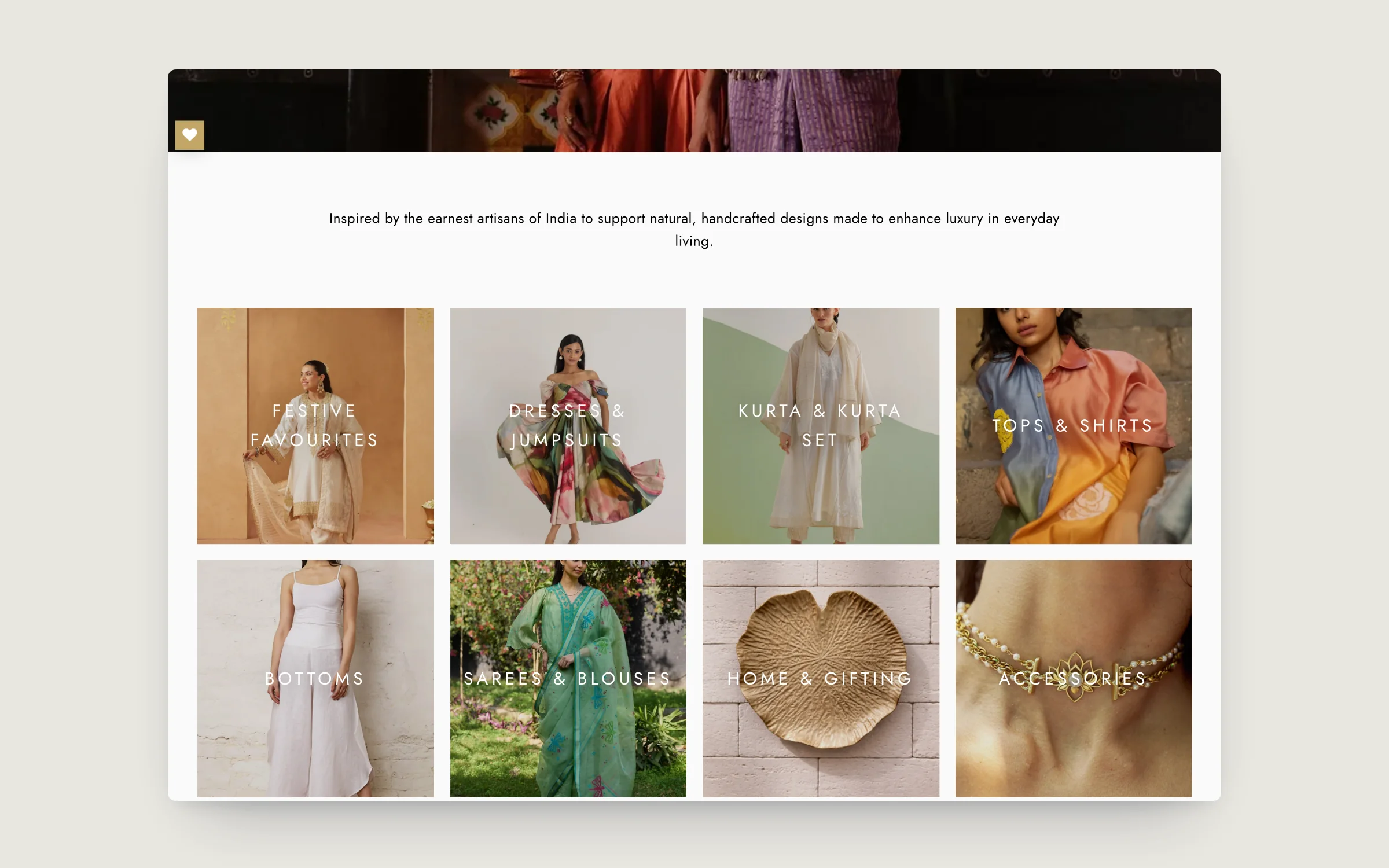
The homepage opens with seasonal campaigns, then shortcuts into the edits that matter, from festive favourites and kurta sets to sarees and home and gifting. Best sellers, everyday luxury, a spotlight of the week and the journal follow.

02Collections & filtering
Multi-designer catalogueShopify development
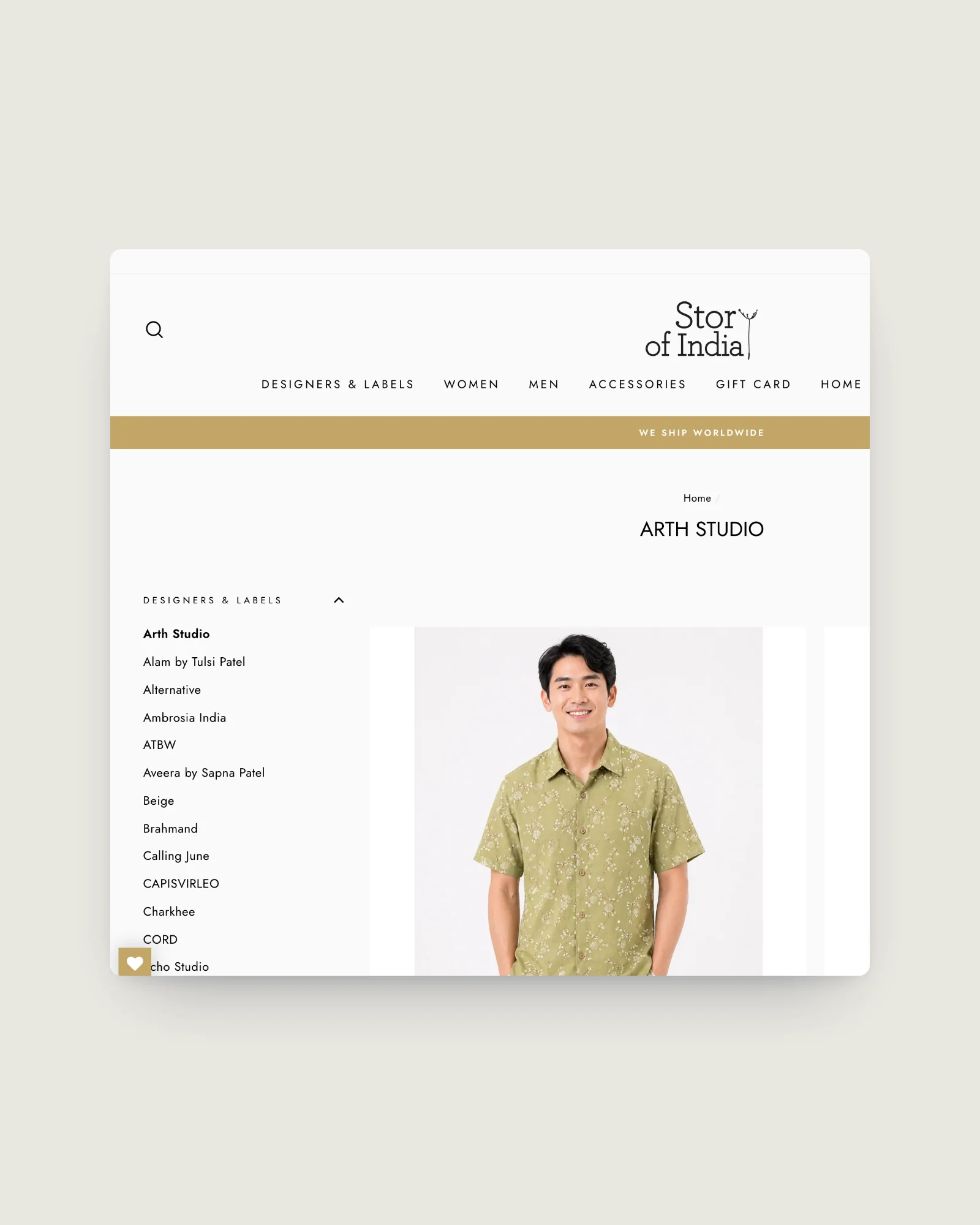
Shop by designer as easily as by category.
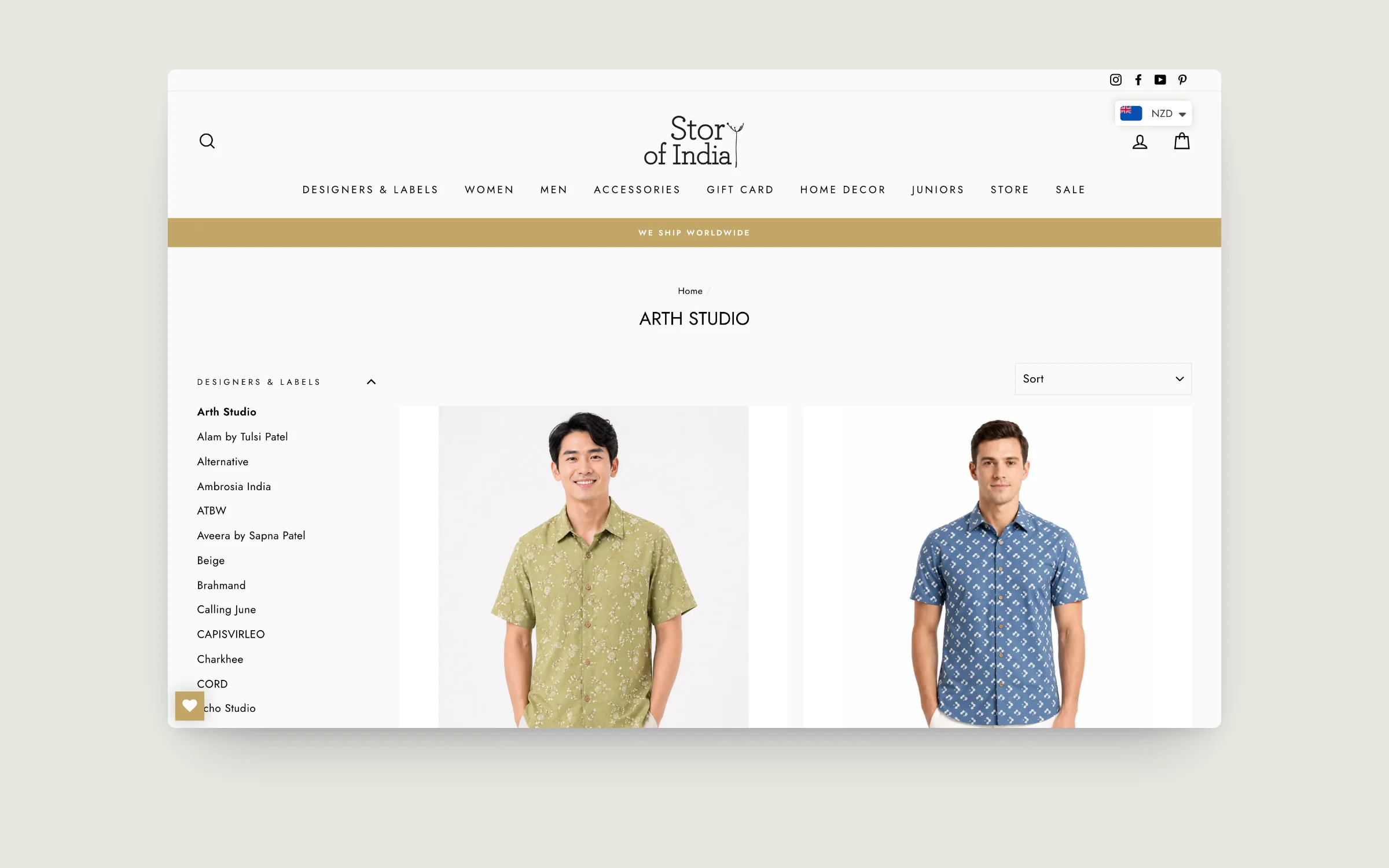
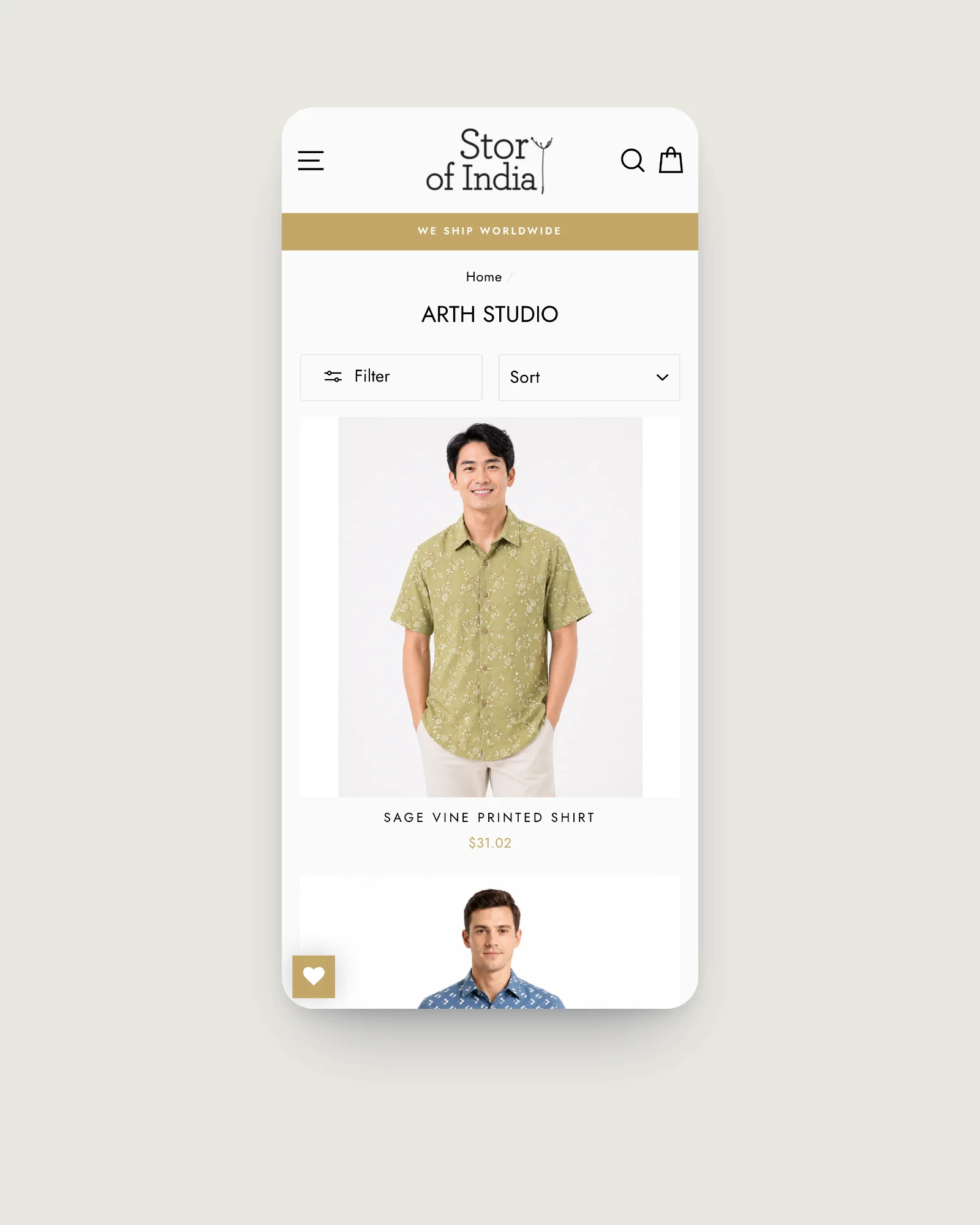
Designers and labels have their own collections, with the full designer list in the filter so a customer can move between labels without starting again.
03Product page
Size guides and wishlistShopify theme development
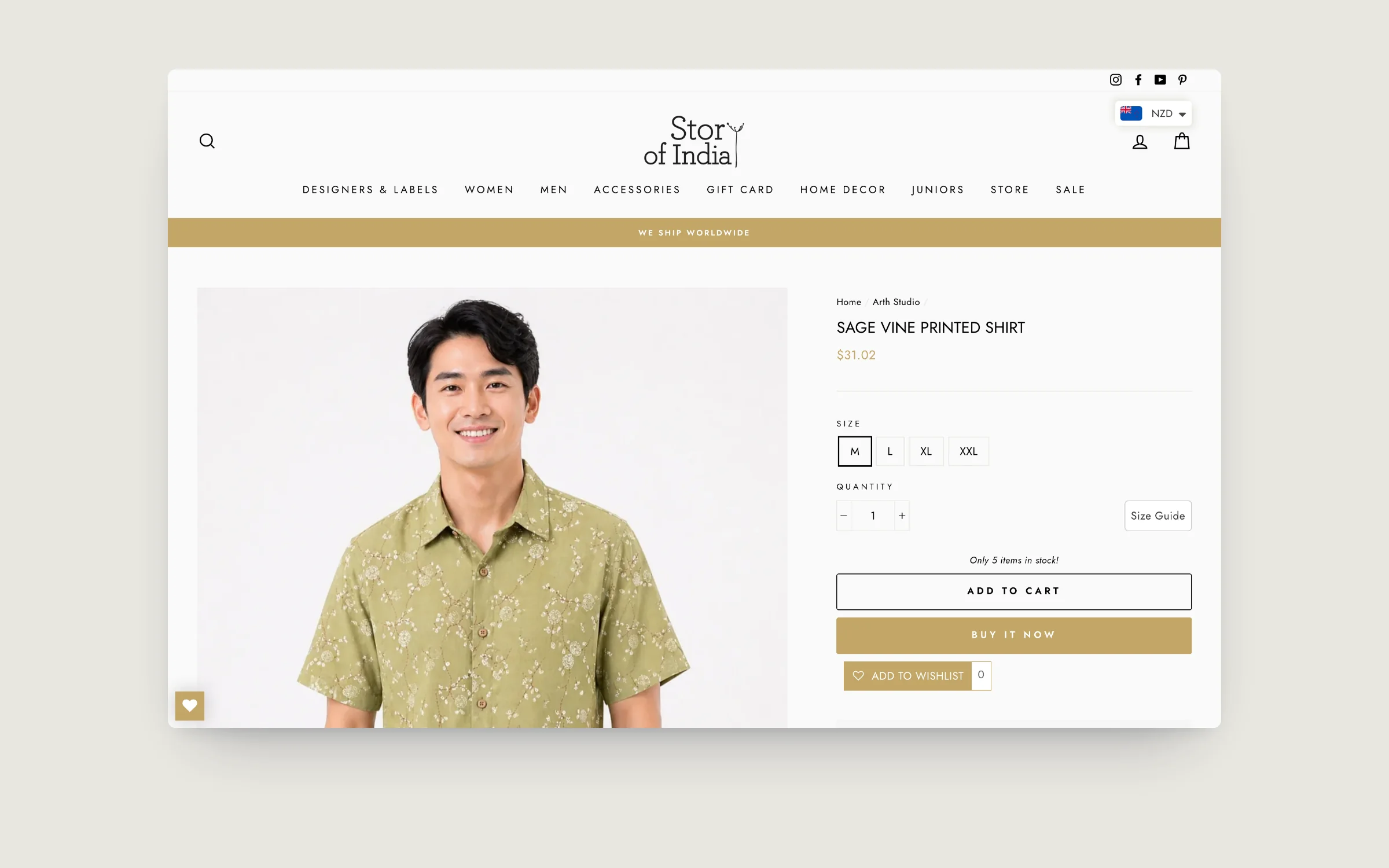
Size, stock and wishlist, side by side.
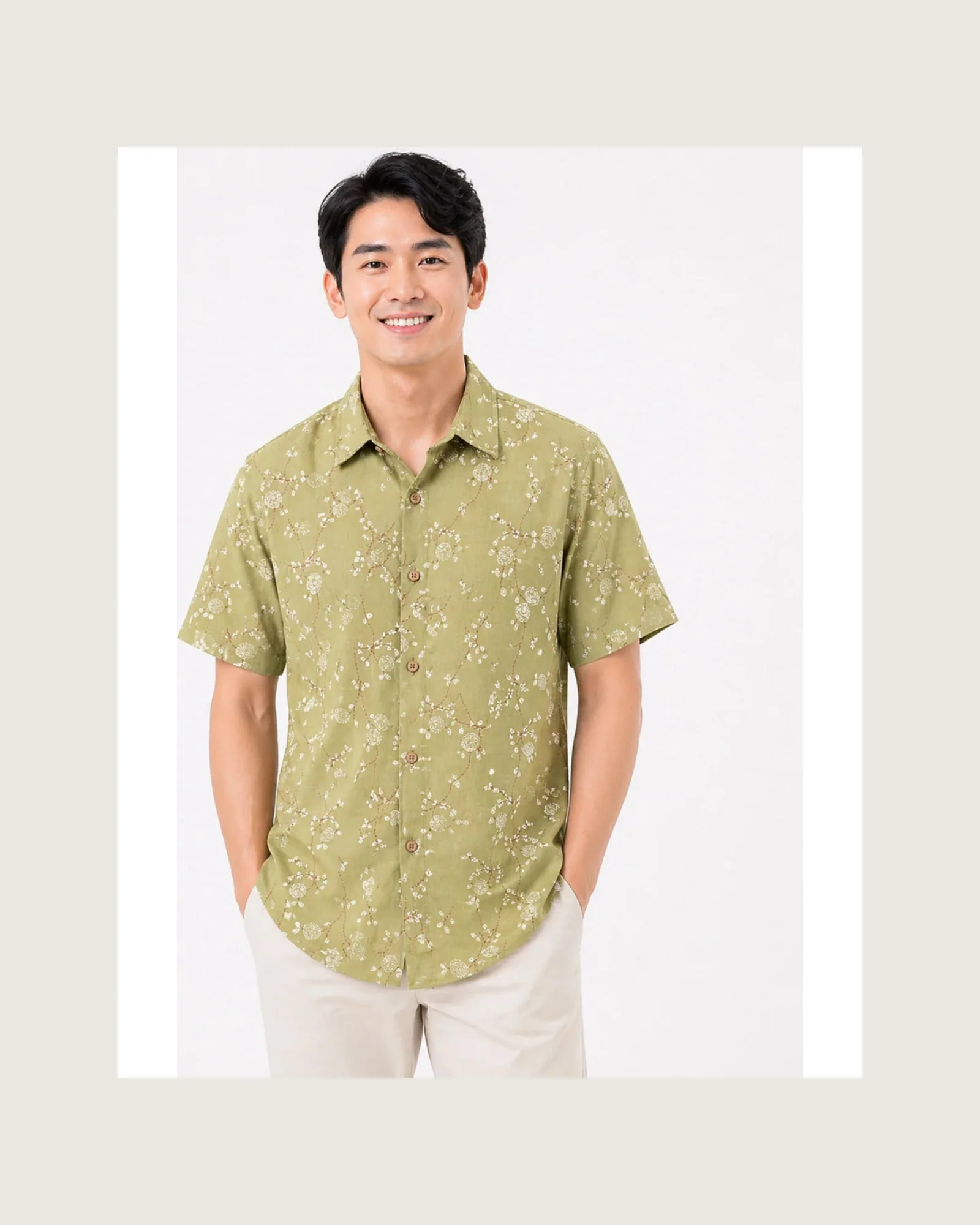
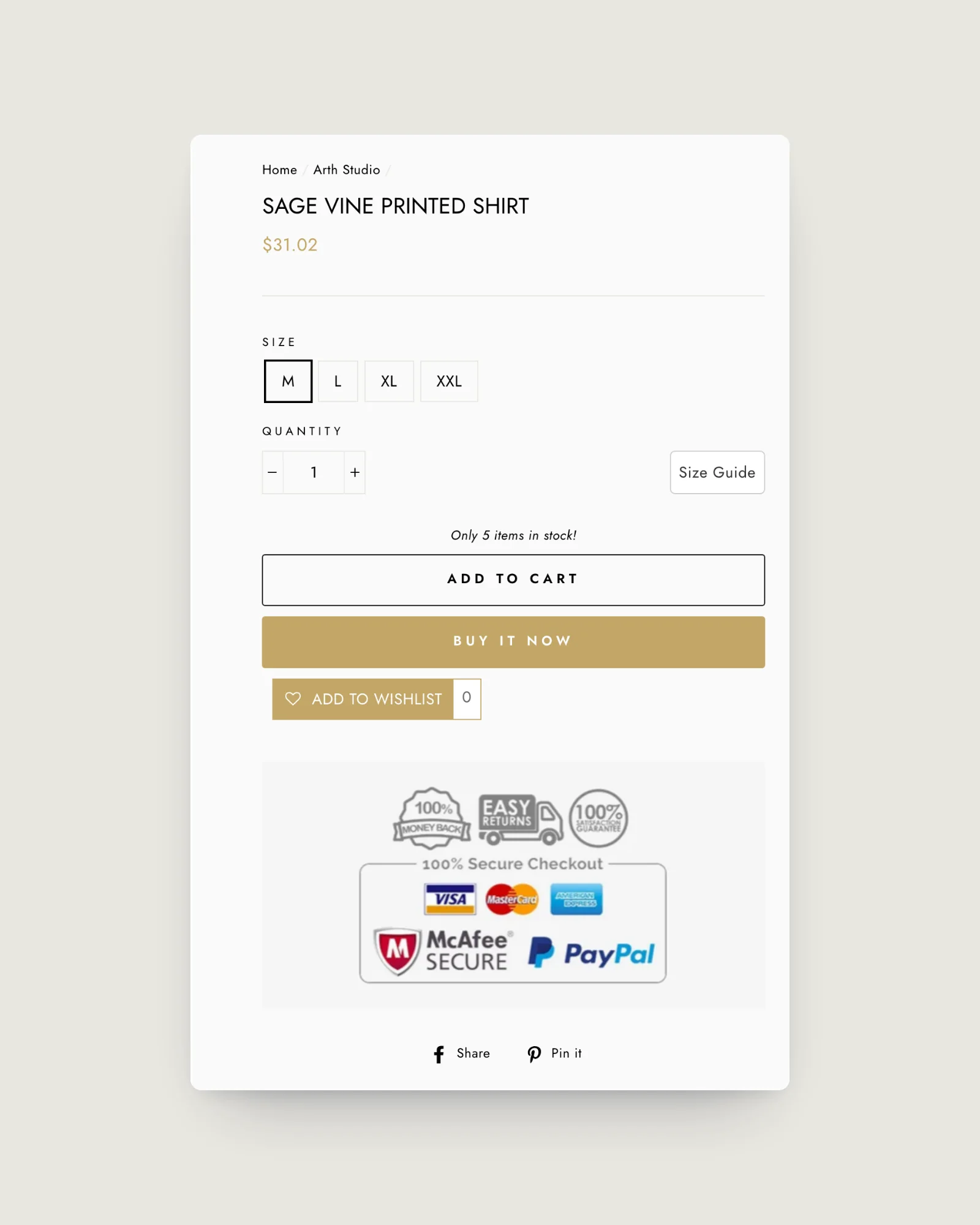
The product page keeps size chips, quantity and a size guide together, shows a low-stock note where it applies, and offers both add to cart and buy it now, plus a wishlist for later.
04Mobile
A boutique that travels.
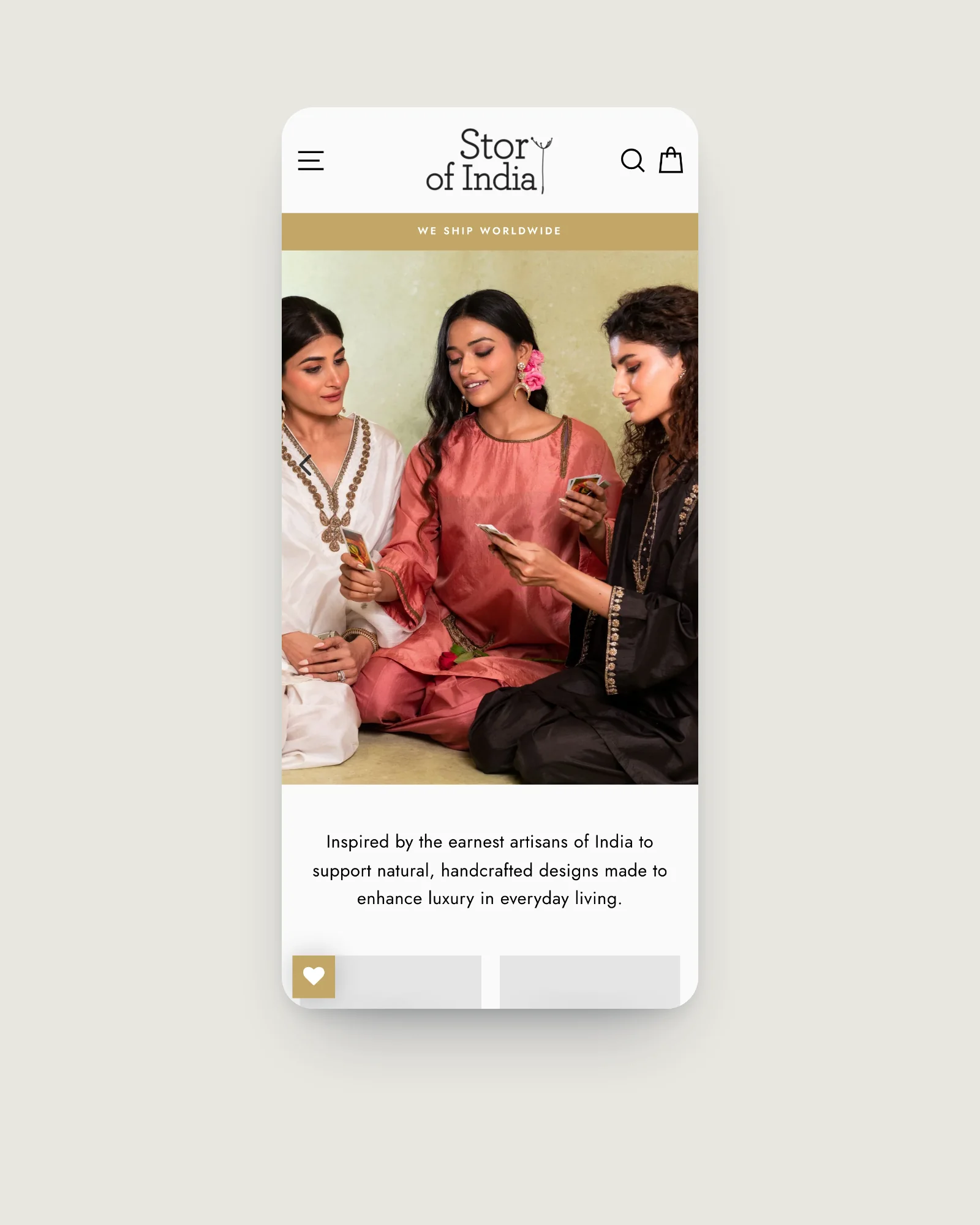
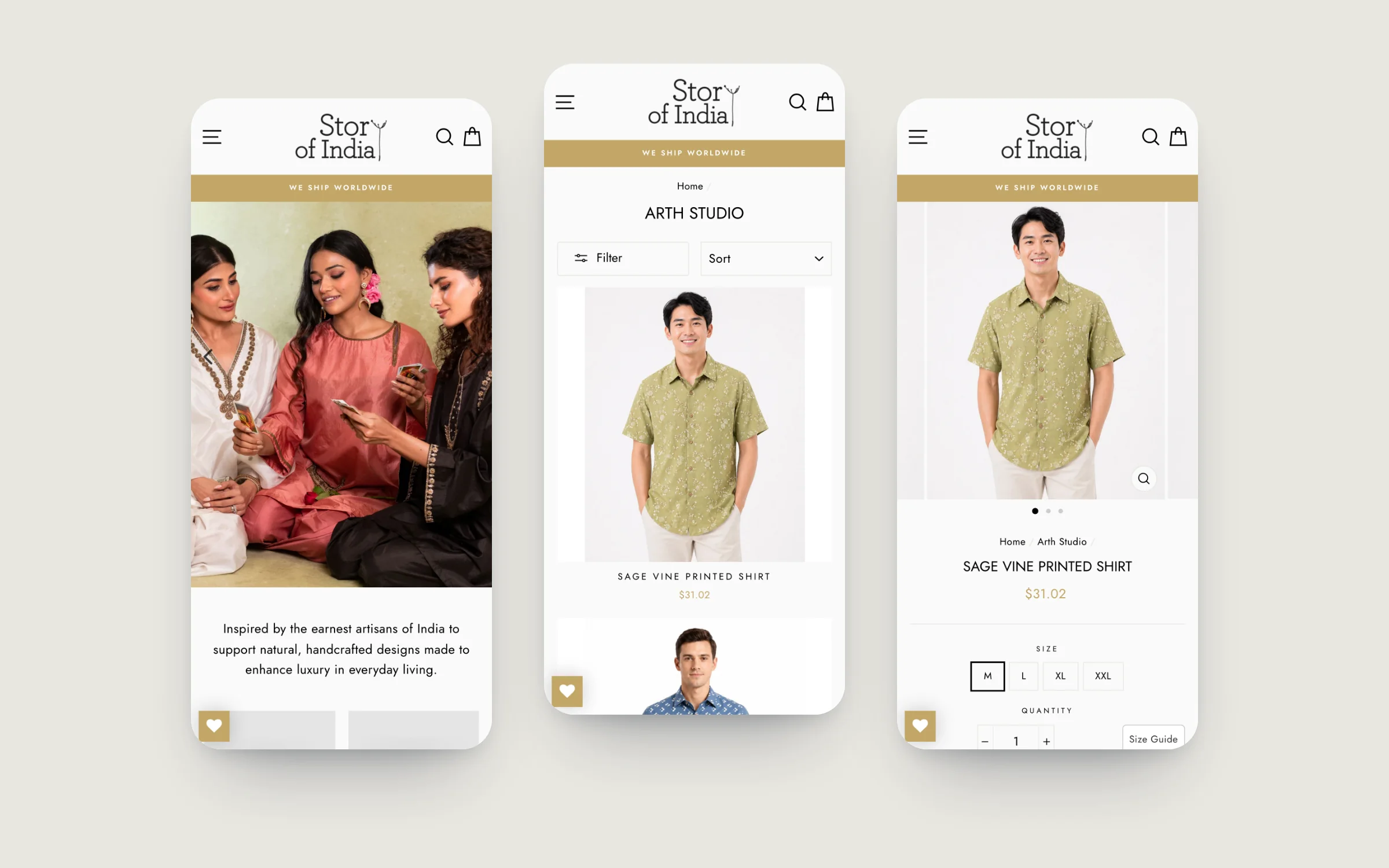
On a phone the campaigns, designer collections and size guide all hold up for customers shopping from anywhere.
What we did
A large, multi-designer catalogue that feels curated, on a store built to sell worldwide.
- Designer-led collections alongside category edits
- Product pages with size guide, stock and wishlist
- A homepage built around seasonal campaigns and the journal
Under the hood
Multi-currency for worldwide shoppersShopify development
What the live store is built from.
Story of India runs on the Impulse theme, version 2.4, read from the live page source. This is what is live in October 2026:
- A wishlist across the store. A wishlist button sits on products, backed by a dedicated wishlist app, so shoppers can save pieces from different designers and come back to them.
- A currency converter. Prices are set in Indian rupees, and a currency converter app lets international shoppers see them in their own currency.
- Size charts. Size guides are linked from the product page next to the size chips.
- Worldwide shipping, stated up front. The announcement bar reads “We ship worldwide”.
- Reviews, email and sign-up. Product reviews, Mailchimp and a sign-up pop-up are loaded on the live store.
Product pages output Product schema with brand, category, images and an Offer in Indian rupees.
Prices in the shopper’s own currency
Prices are set in rupees and a currency converter shows international shoppers what a piece costs in their own money. Switch currency to see it.
Example designer label
Cotton kurta set
₹8,000$100A$145£76NZ$160
Prices are set in Indian rupees. The converter shows them in the shopper’s own currency.
An example product with illustrative, rounded exchange rates, not live rates and not Story of India’s prices.
Measured today
Checked on 3 October 2026.
We re-read the live store and Google’s real-visitor data on 3 October 2026. These figures describe the store as it runs today, including any apps added since our build.
- Real visitors (Google Chrome UX Report, whole store, phones, 75th percentile, 28 days to 3 Oct 2026): Largest Contentful Paint 1.9 s, Interaction to Next Paint 120 ms, Cumulative Layout Shift 0.00. All three Core Web Vitals are inside Google’s “good” thresholds for real mobile visitors.
For similar merchants
Curated, not crowded.
A multi-designer boutique has two catalogues at once: the one organised by designer and the one organised by what the shopper wants to wear. Story of India keeps both. Designers have their own collections, and the full designer list sits in the filters, while the homepage leads with edits such as festive favourites, kurta sets and sarees.
For a store selling across borders, the basics carry a lot of weight: a clear worldwide shipping message, prices a shopper can read in their own currency and size guides on every garment. None of it is glamorous, and all of it removes a reason to leave.
The real-visitor data also makes a point worth repeating: a store full of photography can still load quickly for real shoppers when images are sized properly and the layout does not move.
Questions
How should a multi-designer store organise its catalogue?
Give each designer or label its own collection, include the designer list in the filters, and also build category edits such as kurta sets or sarees. Shoppers then move between labels without starting their search again.
Can a Shopify store priced in rupees sell worldwide?
Yes. Story of India sets prices in Indian rupees, states worldwide shipping in the announcement bar and uses a currency converter so international shoppers can read prices in their own currency.
Do lots of product photos make a store slow?
Not necessarily. Story of India's real-visitor data shows good loading and no layout shift. What matters is serving each image at the size it is shown and reserving space for it, not the number of photos.
Related case studies
All work Handwoven womenswearSahana Built from scratch: a story-led homepage, size and price filters, and a size checker beside every size selector.
 Organic clothingWorld of Crow Colour, pattern and length filters on a quiet, fast store, inside Google’s good Core Web Vitals range for real mobile visitors.
 Fine jewelryFerkos Fine Jewelry Eight years together, from a Basic plan to Shopify Plus and from $10k to $1.5M in order volume.